A mark of a special place is one that continually nudges you, inviting you to learn more, and then never ceases to surprise you. Despite four years of following and three years of periodically visiting, I definitely don't know Haiti. I write from Santo Domingo, tomorrow going to spend my Spring Break week in Haiti, mostly PauP. A short time. A new time, hoping to build some relationships within the Haiti advocacy / human rights circles. Also will support and accompany some Haitian university students who are interested in this work, in hopes of beginning a sustained relationship. All of which is completely new to me, but I somehow sense that I should RSVP, again, to Haiti's invitation. Watch, listen, learn, be.
I like to remember my different entry points into any situation, and the emotions they evoke. It's good to remind myself of what changes, and what remains constant always.
Just over one year ago, I entered Haiti to pitch in at the Leogane field hospital. March 1 2010, I anxiously boarded my flight, having just stayed up all night in the Miami airport to answer emails and stew frenetically over the uncertainty of work that lay before me. I was so scared. Yet, over those following months, the people and situations I encountered surprised me in the most beautiful ways, beyond anything I could have imagined.
For tomorrow's entry, I'm not scared. Excited about being surprised, encountering something new in what is Haiti to me--the mystery and complexity, the persistent struggle, the Kompa music beat, the life of streets, the sadness, the spontaneous joy. The belief in freedom, that Neg Mawon p ap janm kraze.
Saturday, March 12, 2011


Tuesday, March 8, 2011
Do global health work in Liberia---please spread this opportunity!
Don't think I've written much about about this yet, but over the last year, I've felt privileged to work with a truly innovative Liberian organization called Tiyatien Health. Founded by survivors of Liberia's civil war, TH partners with local communities to provide care for HIV/AIDS and other chronic diseases. Through a core network of paid community health workers, "accompaniers," TH both treats these complex diseases, and addresses the root issues of poverty and dis-empowerment that perpetuate illness. Some of you friends voted for TH in an online Changemakers competition last year, and we won!
For more info, see here and here
TH is recruiting for two exciting positions: an HIV/AIDS Capacity Building Officer, and a National Health Policy Advisor. Both are 1-year volunteer positions, based in Liberia. RECRUITING NOW. Would be most grateful for sharing this among circles of potentially interested people. Thanks!
Here's the National Health Policy Advisor job description and contact info:
Tiyatien Health National Health Policy Advisor RFA_v1(2)
And the HIV/AIDS Capacity Building Officer one:
HIV_AIDS Capacity Building Officer_v2
For more info, see here and here
TH is recruiting for two exciting positions: an HIV/AIDS Capacity Building Officer, and a National Health Policy Advisor. Both are 1-year volunteer positions, based in Liberia. RECRUITING NOW. Would be most grateful for sharing this among circles of potentially interested people. Thanks!
Here's the National Health Policy Advisor job description and contact info:
Tiyatien Health National Health Policy Advisor RFA_v1(2)
And the HIV/AIDS Capacity Building Officer one:
HIV_AIDS Capacity Building Officer_v2
Saturday, March 5, 2011
Creating a Language
Five weeks back in med school. A few have wondered how I’m doing with the transition of meeting 130 new classmates and going back to basic science filling much of my mind [thank you for asking!]. To answer, I haven’t had much chance to think about it. We are moving SO fast. I feel like a car revving up RPMs, but unable to shift to an easier gear. Perhaps this inability to master any given topic is part of the hidden curriculum: teaching us about the inevitable powerlessness we will someday face in treating real disease... Anyway, I am struggling a lot to understand how a single organ system works, much less how they all jive together.
Despite the self-degrading overwhelmingness and need to titrate much caffeine for bare minimum function, I do understand one thing: we are not so much learning things as we are learning a way to talk about things. And that entry into a new way of speaking… it’s thrilling.
Today, I can at least talk about lung compliance and blood volume status. Couldn't do that a year ago. And, because of “extra” experiences—an awesome global health elective, a rockstar conferences on global non-communicable diseases...—I am expanding my diction beyond the basic science, to articulating a burden of disease and specific (sometimes controversial, often unproven) strategies to keep people well. I don’t know a single aspect of these things in any depth—probably much less depth than my physiology professor will expect for next week’s exam—but I am at least starting to learn a new way of speaking, and someday acting on my words. I am learning a language.
I had a conversation last week that got me thinking about language. We were talking about the discourse of global health as compared to the discourse of spiritually-grounded medicine. Typically, those are different conversations.
Global health people, such as the esteemed participants of last week’s conference, talk freely about community-grounded solidarity and human rights frameworks…systems solutions that translate to clear, deliverable health outcomes. Humanistic medicine people talk about the way illness “disturbs a soul” (as Daniel Sulmasy writes), and the privilege of healthcare providers encountering a patient’s suffering, and sometimes healing... though not always in the obvious ways. Panning away from health alone, Notre Dame made me much familiar with the most personal aspects of social justice—that we must intentionally sustain our own work, because we believe what Oscar Romero said, that “we are workers, not master builders...we are prophets of a future not our own.”
So, I wonder: might we find ways to merge those conversations? A rights-based solidarity approach, an appreciation for the spirit of people in health and illness, and an intentional long view that keeps us moving as individual members of a incomprehensibly grand whole...how do we talk about these ideas? I can think of a few common words—compassion, suffering with, momentum, focus, justice, trust, hope. Much remains to be said.
So, back in medical school, I am learning a browbeatingly difficult language. Wish me luck. Perhaps I might also help create a language.
Despite the self-degrading overwhelmingness and need to titrate much caffeine for bare minimum function, I do understand one thing: we are not so much learning things as we are learning a way to talk about things. And that entry into a new way of speaking… it’s thrilling.
Today, I can at least talk about lung compliance and blood volume status. Couldn't do that a year ago. And, because of “extra” experiences—an awesome global health elective, a rockstar conferences on global non-communicable diseases...—I am expanding my diction beyond the basic science, to articulating a burden of disease and specific (sometimes controversial, often unproven) strategies to keep people well. I don’t know a single aspect of these things in any depth—probably much less depth than my physiology professor will expect for next week’s exam—but I am at least starting to learn a new way of speaking, and someday acting on my words. I am learning a language.
I had a conversation last week that got me thinking about language. We were talking about the discourse of global health as compared to the discourse of spiritually-grounded medicine. Typically, those are different conversations.
Global health people, such as the esteemed participants of last week’s conference, talk freely about community-grounded solidarity and human rights frameworks…systems solutions that translate to clear, deliverable health outcomes. Humanistic medicine people talk about the way illness “disturbs a soul” (as Daniel Sulmasy writes), and the privilege of healthcare providers encountering a patient’s suffering, and sometimes healing... though not always in the obvious ways. Panning away from health alone, Notre Dame made me much familiar with the most personal aspects of social justice—that we must intentionally sustain our own work, because we believe what Oscar Romero said, that “we are workers, not master builders...we are prophets of a future not our own.”
So, I wonder: might we find ways to merge those conversations? A rights-based solidarity approach, an appreciation for the spirit of people in health and illness, and an intentional long view that keeps us moving as individual members of a incomprehensibly grand whole...how do we talk about these ideas? I can think of a few common words—compassion, suffering with, momentum, focus, justice, trust, hope. Much remains to be said.
So, back in medical school, I am learning a browbeatingly difficult language. Wish me luck. Perhaps I might also help create a language.
Wednesday, January 12, 2011
From 'Anba' to 'Aba' and 'Kenbe La': We don't give up, ever
Rubble hasn't moved, but has again become a focal point. Before anything else, please look at these 15 photos and read this reflection from Let Haiti Live [the events come from a schedule I posted a few days ago]. Melinda writes more eloquently than anything I've read or could say below: about the way Haitians are sharing collective memory, and rising today from tarps & tents as they do each day. [So you can stop reading now, having gathered the real point. Or perhaps follow a little more...]
I. "Anba": means 'under', as 230,000 people were crushed by concrete a year ago today, and millions who survived were cruelly shaken from their lives' foundations. How could we imagine? My hands shake as I type right now, feeling again that first night's sleepless vigil, and days of constant watching. We were there for Haiti. We cared, and responded.
Much happened. Groups like Partners in Health and many, many others did deliver lifesaving relief. I was privileged to accompany one of these incredible efforts through medical relief in Leogane. Haitians helped their neighbors from 'anba dekombe' to receive medical care, and start a precarious new day-to-day existence.
Much hasn't happened. One year later and more than 1 million still keep their families under tents or tarps in camps with inhumane lack of sanitation or other basic services. Only 38 percent of money raised by NGOs has been spent. The Huffington Post did some neat work tracking this. Fully half of American households donated, and we deserve accountability on our generosity. Our Haitian neighbors also deserve this accountability.
The International Office of Migration reports a 31 percent decrease since July in the number of people living in displacement camps. A success, notes the report, that victims are finding their own housing solutions and "getting on with their lives"... but IOM fails to mention that 29 percent of camps have been forcibly evicted, despite such eviction violating both Haitian and international humanitarian law. A solution? People who leave camps are NOT going to better places.
Cholera was a threat from the outset. One week post-quake, I remember my churning stomach as I read the first speculations of major infectious disease compounding the crisis. And so it came. Last week, Ban Ki-Moon named an independent commission to investigate the potential source of the epidemic, since a likely candidate is a contingent of UN peacekeepers from Nepal who arrived just before the epidemic began, and whose base was expelling raw sewage into the river upstream of initial case appearances. The New England Journal of Medicine published a study last month showing the Haitian strain to be genetically most like those from South Asia.
The president of the international coordination for Medecins San Frontieres recently analyzed the lackluster response to the epidemic, writing in The Guardian (and this assessment applies in other sectors): "Co-ordination of aid organisations may sound good to government donors seeking political influence. In Haiti, though, the system is legitimizing NGOs that claim responsibility for health, sanitation or other areas in a specific zone, but then do not have the capacity or know-how to carry out the necessary work. As a result, people's needs go unmet."
Which leads to...
II. "Aba": 'down with', frequently found as a first word on protest signs and graffiti. The discontent runs deep. Haiti won freedom 207 years ago in the world's only successful slave rebellion, defeating Napoleon. But they still are not free. Watching the terrible PBS Frontline "Battle for Haiti" tonight (really, quite awful), I realized how easy it would be to think of Haiti as a sick & savage land whose people prey on their own. No. Haitians dig each other out of rubble and carry each other to cholera treatment centers, saving their own. The savagery is orchestrated in international boardrooms, actually.
People talk about "discontent" and "civil unrest" among the population, with a spike of mainstream media coverage last month on the protests. No kidding. Their country is ruled not only by the aforementioned "Republic of NGOs" who are held to no real accountability. But also, all official rebuilding projects (and the $5 billion pledged for these by int'l donors) are administered through the Interim Haiti Reconstruction Commission, which has met only a handful of times since its March formation. Foreign members include relevant donor entities (IMF, World Bank, etc). Yet, Haitian members of the IHRC recently published a scathing complaint they are pointedly excluded from discussion by the foreigners, and even physically denies a seat at the table.
And the elections? Predictable. Listening to Voice of America Creole radio this summer, I learned of the exclusive and unfair electoral preparation, and talk of boycott. Low turnout plus clear fraud means the process could not be considered democratic on any other planet, much less 21st century self-determining Earth. See CEPR's report here for a few numbers, and here on how the international community is likely to accept the results anyway.
Yep, if it were my country and my entire chance at an optimistic future, I'd be pretty ticked off, too. 'Aba' is not unreasonable. It is not uncivil.
It is also progressive with a hopeful spirit...
III. "Kenbe la": 'hang in there'...see those most important first links above. People in desperate, excruciatingly unending crises still talk. Still share collective memory. Still emerge from tarps and tents each morning. Still work together.
This week, one year ago, I did not sleep. Because I couldn't believe what was happening; and I still sometimes toss & turn, angry at such undeserved cruelty. Friends in Haiti still living in tents must be angry, too, but they are also taking progressive steps of advocacy & action. We can support them. Men anpil, chay pa lou. When hands are many, the burden is light.
Let Haiti Live has posted a compilation of further analyses, FYI.
4:53PM EST on January 12. I've heard that for 35 seconds, bells all over (including at Notre Dame) will toll to mark the shaking.
I believe that action, life, comes from emotion. So I think I will simply allow myself to feel. To honestly, profoundly...hurt. Join me.
I. "Anba": means 'under', as 230,000 people were crushed by concrete a year ago today, and millions who survived were cruelly shaken from their lives' foundations. How could we imagine? My hands shake as I type right now, feeling again that first night's sleepless vigil, and days of constant watching. We were there for Haiti. We cared, and responded.
Much happened. Groups like Partners in Health and many, many others did deliver lifesaving relief. I was privileged to accompany one of these incredible efforts through medical relief in Leogane. Haitians helped their neighbors from 'anba dekombe' to receive medical care, and start a precarious new day-to-day existence.
Much hasn't happened. One year later and more than 1 million still keep their families under tents or tarps in camps with inhumane lack of sanitation or other basic services. Only 38 percent of money raised by NGOs has been spent. The Huffington Post did some neat work tracking this. Fully half of American households donated, and we deserve accountability on our generosity. Our Haitian neighbors also deserve this accountability.
The International Office of Migration reports a 31 percent decrease since July in the number of people living in displacement camps. A success, notes the report, that victims are finding their own housing solutions and "getting on with their lives"... but IOM fails to mention that 29 percent of camps have been forcibly evicted, despite such eviction violating both Haitian and international humanitarian law. A solution? People who leave camps are NOT going to better places.
Cholera was a threat from the outset. One week post-quake, I remember my churning stomach as I read the first speculations of major infectious disease compounding the crisis. And so it came. Last week, Ban Ki-Moon named an independent commission to investigate the potential source of the epidemic, since a likely candidate is a contingent of UN peacekeepers from Nepal who arrived just before the epidemic began, and whose base was expelling raw sewage into the river upstream of initial case appearances. The New England Journal of Medicine published a study last month showing the Haitian strain to be genetically most like those from South Asia.
The president of the international coordination for Medecins San Frontieres recently analyzed the lackluster response to the epidemic, writing in The Guardian (and this assessment applies in other sectors): "Co-ordination of aid organisations may sound good to government donors seeking political influence. In Haiti, though, the system is legitimizing NGOs that claim responsibility for health, sanitation or other areas in a specific zone, but then do not have the capacity or know-how to carry out the necessary work. As a result, people's needs go unmet."
Which leads to...
II. "Aba": 'down with', frequently found as a first word on protest signs and graffiti. The discontent runs deep. Haiti won freedom 207 years ago in the world's only successful slave rebellion, defeating Napoleon. But they still are not free. Watching the terrible PBS Frontline "Battle for Haiti" tonight (really, quite awful), I realized how easy it would be to think of Haiti as a sick & savage land whose people prey on their own. No. Haitians dig each other out of rubble and carry each other to cholera treatment centers, saving their own. The savagery is orchestrated in international boardrooms, actually.
People talk about "discontent" and "civil unrest" among the population, with a spike of mainstream media coverage last month on the protests. No kidding. Their country is ruled not only by the aforementioned "Republic of NGOs" who are held to no real accountability. But also, all official rebuilding projects (and the $5 billion pledged for these by int'l donors) are administered through the Interim Haiti Reconstruction Commission, which has met only a handful of times since its March formation. Foreign members include relevant donor entities (IMF, World Bank, etc). Yet, Haitian members of the IHRC recently published a scathing complaint they are pointedly excluded from discussion by the foreigners, and even physically denies a seat at the table.
And the elections? Predictable. Listening to Voice of America Creole radio this summer, I learned of the exclusive and unfair electoral preparation, and talk of boycott. Low turnout plus clear fraud means the process could not be considered democratic on any other planet, much less 21st century self-determining Earth. See CEPR's report here for a few numbers, and here on how the international community is likely to accept the results anyway.
Yep, if it were my country and my entire chance at an optimistic future, I'd be pretty ticked off, too. 'Aba' is not unreasonable. It is not uncivil.
It is also progressive with a hopeful spirit...
III. "Kenbe la": 'hang in there'...see those most important first links above. People in desperate, excruciatingly unending crises still talk. Still share collective memory. Still emerge from tarps and tents each morning. Still work together.
This week, one year ago, I did not sleep. Because I couldn't believe what was happening; and I still sometimes toss & turn, angry at such undeserved cruelty. Friends in Haiti still living in tents must be angry, too, but they are also taking progressive steps of advocacy & action. We can support them. Men anpil, chay pa lou. When hands are many, the burden is light.
Let Haiti Live has posted a compilation of further analyses, FYI.
4:53PM EST on January 12. I've heard that for 35 seconds, bells all over (including at Notre Dame) will toll to mark the shaking.
I believe that action, life, comes from emotion. So I think I will simply allow myself to feel. To honestly, profoundly...hurt. Join me.
Monday, January 10, 2011
A Misdiagnosis in Haiti
One of the under-covered Haiti stories, choosing from the current smorgasboard, involves removal of a top diplomat apparently because of his simple honesty. Brazilian Ricardo Seitenfus has a 17-year history of work in Haiti, and was serving as Special Representative for the Organization of American States (OAS). On December 20, Swiss newspaper Le Temps published an interview in which Seitenfus offered a pointed, yet logical critique of the international community's post-earthquake response. That same day, he was asked to take a vacation and has since been informed he will not resume his former post.
BBC Brazil and Huffington Post have run stories on this, though absent from other other media, and today Aljazeera published a new interview.
Some readers of this blog might know I'm now working with a group attempting to produce a comprehensive report on the presence and actions of the UN peacekeeping forces (MINUSTAH)--which has operated in Haiti since May 2004, on a budget of $865 million this year. We hope our research/advocacy effort can harmonize with a 10-month grassroots campaign against MINUSTAH's mandate renewal, led by the Haiti civil society organizations mentioned in my previous post.
Thus, I resonated with this comment from Seitenfus. How simple, really. One would think.
Aljazeera: "Your main criticism of the U.N.’s work in Haiti is that they put too much of a focus on security. Explain what you mean."
Seitenfus: "I believe the international system of prevention and solution of conflicts is not prepared to treat specific cases such as Haiti. Haiti is not a threat to international security. It is not a threat to regional security. It’s not a threat to Cuba or the Dominican Republic. Haiti doesn’t even have armed forces…. With relation to the UN, I ask myself if we’re not just fooling ourselves. Wouldn’t it be better if the counsel of social and economic development oversees Haiti and would have priority, instead of the council on security? Haiti is not a threat to international peace and security. Haiti is a threat to itself and its own people…The life of the Haitian people is hard. Especially after the earthquake. After the quake we have 1.5 million people that are still living under tents in the parks and in the streets. I imaged that after January 12, 2010, the world would not only show that extraordinary solidarity to help Haiti, but it would also say, ‘Let’s stop and think if we are not mis-diagnosing Haiti with wrong formulas.’ But no, we didn’t ask that question. What we did was to send more soldiers in. So I think Haiti is much more complicated and much more delicate and multifaceted than simply sending peace keeping forces of the UN to image that Haiti can be rescued from the situation. The presence of the military is contradictory and counter-intuitive with me without talking about the moral questions. With MINUSTAH (U.N. peacekeeping forces in Haiti), we spent $600 million dollars per year this year. $865 million dollars this year alone, I think. That is besides what every member of MINUSTAH spends. So I believe we need to do a balance sheet - an audit almost - to take stock of how we have advanced in this last 6 and half years and to make a new strategy with relation to Haiti. I think we fool ourselves with who the real enemy here. The enemy of Haiti is misery, is lack of hope, the lack of perspective, lack of work, lack of income. Not security.”
BBC Brazil and Huffington Post have run stories on this, though absent from other other media, and today Aljazeera published a new interview.
Some readers of this blog might know I'm now working with a group attempting to produce a comprehensive report on the presence and actions of the UN peacekeeping forces (MINUSTAH)--which has operated in Haiti since May 2004, on a budget of $865 million this year. We hope our research/advocacy effort can harmonize with a 10-month grassroots campaign against MINUSTAH's mandate renewal, led by the Haiti civil society organizations mentioned in my previous post.
Thus, I resonated with this comment from Seitenfus. How simple, really. One would think.
Aljazeera: "Your main criticism of the U.N.’s work in Haiti is that they put too much of a focus on security. Explain what you mean."
Seitenfus: "I believe the international system of prevention and solution of conflicts is not prepared to treat specific cases such as Haiti. Haiti is not a threat to international security. It is not a threat to regional security. It’s not a threat to Cuba or the Dominican Republic. Haiti doesn’t even have armed forces…. With relation to the UN, I ask myself if we’re not just fooling ourselves. Wouldn’t it be better if the counsel of social and economic development oversees Haiti and would have priority, instead of the council on security? Haiti is not a threat to international peace and security. Haiti is a threat to itself and its own people…The life of the Haitian people is hard. Especially after the earthquake. After the quake we have 1.5 million people that are still living under tents in the parks and in the streets. I imaged that after January 12, 2010, the world would not only show that extraordinary solidarity to help Haiti, but it would also say, ‘Let’s stop and think if we are not mis-diagnosing Haiti with wrong formulas.’ But no, we didn’t ask that question. What we did was to send more soldiers in. So I think Haiti is much more complicated and much more delicate and multifaceted than simply sending peace keeping forces of the UN to image that Haiti can be rescued from the situation. The presence of the military is contradictory and counter-intuitive with me without talking about the moral questions. With MINUSTAH (U.N. peacekeeping forces in Haiti), we spent $600 million dollars per year this year. $865 million dollars this year alone, I think. That is besides what every member of MINUSTAH spends. So I believe we need to do a balance sheet - an audit almost - to take stock of how we have advanced in this last 6 and half years and to make a new strategy with relation to Haiti. I think we fool ourselves with who the real enemy here. The enemy of Haiti is misery, is lack of hope, the lack of perspective, lack of work, lack of income. Not security.”
Saturday, January 8, 2011
Nou pa janm bliye: those who annually remember, and those who can never forget
Subscript of post title is "why I love Haiti"...read on to find out.
The deluge has started. As an anniversary approaches, the mainstream media is beginning its 'insightful' look at "Haiti: one year later." My daily newsfeed haunts are spiking from their baseline of independent/alternative press and policy analysis sites to include NYT, WashPo, NPR, BBC at greater concentration.
On this blog, I will offer a manageable digest of what I think are the salient points on the one-year mark...one year since 30-seconds of shaking marked arguably the worst natural disaster in recent history, in a place most vulnerable to such destruction. I promise to give a readable listing, for anyone who wants to turn off Anderson Cooper (nothing personal against the guy) and spend 30-minutes getting the real story. One time, 30 minutes. I hope there are a few of you folks out there...
In coordination with the anniversary, a number of Haitian-rooted advocacy groups are updating their investigative reports across the spectrum of calamities: IDP camp conditions, gender-based violence, ballot fraud, cholera, aid accountability etc... Another deluge, but of the pivotal "bearing witness" kind. I'll attempt to post links for these as well.
Understandably, given our busy lives, we can tune out this crisis and overlook its heightening intensity. Yet, 1 million people have been living in tents for one full year, and they cannot forget. Ever, not for even a second.
So, the most *important* message January 12, 2011 is what comes from these people. Instead of waiting passively for aid that is not coming, they have ORGANIZED. See below agenda (courtesy of original post in Bri Kouri Nouvèl Gaye), English translation not mine.
Haitian camp residents, civil society organizations, and other grassroots efforts have coordinated to produce a WEEK OF ACTIVITIES in the displacement camps themselves. Including a 45-panel photo exhibit, and critically analytical forums and discussions---these people are living their rights. Imagine trying to feed & care for your family, living in a wind-battered tent with no brighter prospects in the foreseeable future...and you still muster the energy to work together, to demand something better?
These people are my heroes. Their courage is why I love Haiti.
-----------------------------------
We Will Not Forget, The Struggle Has Just Begun
A Week of Activities to Mark One Year Since the Catastrophe of January 12, 2010
Initiative to Resist the Eviction of the Internally Displaced*
*Members of the Initiative/Supporters of the program include: Bri Kouri Nouvèl Gaye, Bureau des Avocats Internationaux, FRAKKA, Inivesite Popile, Asosyasyon Vwazen Solino (AVS), Batay Ouvriye, Camp Committees from Camp Imakile, Camp Kanaran, Camp Babankou, Camp Kozbami, International Action Ties, Let Haiti Live (a project of TransAfrica Forum)
January 5, 9am - 2pm
- Press conference to launch week of activities
January 8, 3-5pm
- Conference Debate and Photo Exhibition at Camp Imakile and Kozbami
THEME: The Struggle for Land and Right to Housing in the context of the application of the neoliberal political economy
Panelists: Patrice Florvilus (BAI), Camille Chalmers (PAPDA), Mark Snyder (IAT), Mark Schuller
January 9, 11am - 5:30pm
- Conference Debate and Photo Exhibition at Camp Babankou
THEME: The Right to Housing, The Struggle of Peasants and Workers
Panelists: Mario Joseph (BAI), Patrice Florvilus (BAI), Mark Schuller
January 10, 3-5:30pm
- Conference Debate and Documentary Film at Camp Karade
THEME: Right to Housing at the Crossroads of the NGOs Waste; Passivity of the Haitian State and Demagogy of the Interim Haiti Reconstruction Commission (IHRC)
Panelists: Didier Dominique (Batay Ouvriye), Patrice Florvilus (BAI), Mark Snyder (IAT)
January 11, 10am-4pm
- Conference Debate at Camp Kanaran
THEME: Right to Housing, Gender-Based Violence, Wasteful NGOs, Demagogy of the Interim Haiti Reconstruction Commission (IHRC)
Panelists: Patrice Florvilus (BAI), Carole Pierre Paul, Camille Chalmers (PAPDA), Mario Joseph (BAI), Mark Snyder (IAT), Mark Schuller, Melinda Miles (LHL)
Witnessing: Victims of the earthquake speak of their experiences living 12 months under tents
Witnessing: The peasants' movement
Documentary Film Screening: A Soapbox in Haiti
Final Declaration
January 12
Public Demonstration starting at the Ministry of Health on Rue St. Honore near the General Hospital
Kreyòl version:
INISYATIV REZISTANS KONT EKSPILSYON DEPLASE ENTÈN YO SEMÈN AKTIVITE POU MAKE 1 AN KATASTWÒF 12 JANVYE 2010 LA
12 JAVYE 2010 – 12 JANVYE 2011
NOU PAP MANJE MANJE BLIYE, BATAY LA FENK KOUMANSE.
5 janvye (9è-14è)
• Konferans pou la près / lansman semèn aktivite yo
8 janvye 2010 (3zè -5è)
• Konferans deba ak Ekzpozisyon foto nan Kan Imakile ak Kozbami
Tem: Batay pou tè/Dwa lojman nan konteks aplikasyon politik ekonomik liberal yo
Animaté : Mark Snyder , Mark Schuller , Patrice Florvilus , Camille Charlemers
9 janvye 2011 (11zè -5è 30 )
• Konferans deba ak Ekzpozisyon foto ( Babankou )
Tèm: Dwa lojman /Lit peyizan ak ouvriye
Animatè: Mario Joseph, Mark Shuler, Patrice Florvilus
10 janvye 2011 ( 3è-5è30)
• Konferans deba ak fim dokimantè ( Karade)
Tèm: Dwa lojman nan Kalfou gagotay ONG ,konpòtman manfouben Leta Ayisyen ak demagoji Komisyon Rekonstriksyon Enterimè a (CIRH)
Animaté : Mark Snyder , Didier Dominique, Patrice Florvilus
11 janvye 2011 (10è-4è) - Kan KA NAWAN - Konferans deba
Tèm : Dwa lojman , vyolans sou fanm nan kan yo, gagotay lan ONG yo ,konpòtman manfouben Leta Ayisyen ak demagoji CIRH la Komisyon Rekonstriksyon Enterimè a (CIRH)
Animaté : Mark Snyder ,Melinda , Mark Shuller , Patrice Florvilus, Carole Pierre Paul , Camille Cha
-Temwanyaj viktim tranbleman sou eksperyans yo fè pandan 12 mwa anba tant
-Temwanyaj mouvman peyizan
-Fim Dokimantè
0Deklarasyon Final
12 janvye :Manifestasyon piblik kap soti devan Ministe Sante nan Ri Sentonore bò Lopital Jeneral
The deluge has started. As an anniversary approaches, the mainstream media is beginning its 'insightful' look at "Haiti: one year later." My daily newsfeed haunts are spiking from their baseline of independent/alternative press and policy analysis sites to include NYT, WashPo, NPR, BBC at greater concentration.
On this blog, I will offer a manageable digest of what I think are the salient points on the one-year mark...one year since 30-seconds of shaking marked arguably the worst natural disaster in recent history, in a place most vulnerable to such destruction. I promise to give a readable listing, for anyone who wants to turn off Anderson Cooper (nothing personal against the guy) and spend 30-minutes getting the real story. One time, 30 minutes. I hope there are a few of you folks out there...
In coordination with the anniversary, a number of Haitian-rooted advocacy groups are updating their investigative reports across the spectrum of calamities: IDP camp conditions, gender-based violence, ballot fraud, cholera, aid accountability etc... Another deluge, but of the pivotal "bearing witness" kind. I'll attempt to post links for these as well.
Understandably, given our busy lives, we can tune out this crisis and overlook its heightening intensity. Yet, 1 million people have been living in tents for one full year, and they cannot forget. Ever, not for even a second.
So, the most *important* message January 12, 2011 is what comes from these people. Instead of waiting passively for aid that is not coming, they have ORGANIZED. See below agenda (courtesy of original post in Bri Kouri Nouvèl Gaye), English translation not mine.
Haitian camp residents, civil society organizations, and other grassroots efforts have coordinated to produce a WEEK OF ACTIVITIES in the displacement camps themselves. Including a 45-panel photo exhibit, and critically analytical forums and discussions---these people are living their rights. Imagine trying to feed & care for your family, living in a wind-battered tent with no brighter prospects in the foreseeable future...and you still muster the energy to work together, to demand something better?
These people are my heroes. Their courage is why I love Haiti.
-----------------------------------
We Will Not Forget, The Struggle Has Just Begun
A Week of Activities to Mark One Year Since the Catastrophe of January 12, 2010
Initiative to Resist the Eviction of the Internally Displaced*
*Members of the Initiative/Supporters of the program include: Bri Kouri Nouvèl Gaye, Bureau des Avocats Internationaux, FRAKKA, Inivesite Popile, Asosyasyon Vwazen Solino (AVS), Batay Ouvriye, Camp Committees from Camp Imakile, Camp Kanaran, Camp Babankou, Camp Kozbami, International Action Ties, Let Haiti Live (a project of TransAfrica Forum)
January 5, 9am - 2pm
- Press conference to launch week of activities
January 8, 3-5pm
- Conference Debate and Photo Exhibition at Camp Imakile and Kozbami
THEME: The Struggle for Land and Right to Housing in the context of the application of the neoliberal political economy
Panelists: Patrice Florvilus (BAI), Camille Chalmers (PAPDA), Mark Snyder (IAT), Mark Schuller
January 9, 11am - 5:30pm
- Conference Debate and Photo Exhibition at Camp Babankou
THEME: The Right to Housing, The Struggle of Peasants and Workers
Panelists: Mario Joseph (BAI), Patrice Florvilus (BAI), Mark Schuller
January 10, 3-5:30pm
- Conference Debate and Documentary Film at Camp Karade
THEME: Right to Housing at the Crossroads of the NGOs Waste; Passivity of the Haitian State and Demagogy of the Interim Haiti Reconstruction Commission (IHRC)
Panelists: Didier Dominique (Batay Ouvriye), Patrice Florvilus (BAI), Mark Snyder (IAT)
January 11, 10am-4pm
- Conference Debate at Camp Kanaran
THEME: Right to Housing, Gender-Based Violence, Wasteful NGOs, Demagogy of the Interim Haiti Reconstruction Commission (IHRC)
Panelists: Patrice Florvilus (BAI), Carole Pierre Paul, Camille Chalmers (PAPDA), Mario Joseph (BAI), Mark Snyder (IAT), Mark Schuller, Melinda Miles (LHL)
Witnessing: Victims of the earthquake speak of their experiences living 12 months under tents
Witnessing: The peasants' movement
Documentary Film Screening: A Soapbox in Haiti
Final Declaration
January 12
Public Demonstration starting at the Ministry of Health on Rue St. Honore near the General Hospital
Kreyòl version:
INISYATIV REZISTANS KONT EKSPILSYON DEPLASE ENTÈN YO SEMÈN AKTIVITE POU MAKE 1 AN KATASTWÒF 12 JANVYE 2010 LA
12 JAVYE 2010 – 12 JANVYE 2011
NOU PAP MANJE MANJE BLIYE, BATAY LA FENK KOUMANSE.
5 janvye (9è-14è)
• Konferans pou la près / lansman semèn aktivite yo
8 janvye 2010 (3zè -5è)
• Konferans deba ak Ekzpozisyon foto nan Kan Imakile ak Kozbami
Tem: Batay pou tè/Dwa lojman nan konteks aplikasyon politik ekonomik liberal yo
Animaté : Mark Snyder , Mark Schuller , Patrice Florvilus , Camille Charlemers
9 janvye 2011 (11zè -5è 30 )
• Konferans deba ak Ekzpozisyon foto ( Babankou )
Tèm: Dwa lojman /Lit peyizan ak ouvriye
Animatè: Mario Joseph, Mark Shuler, Patrice Florvilus
10 janvye 2011 ( 3è-5è30)
• Konferans deba ak fim dokimantè ( Karade)
Tèm: Dwa lojman nan Kalfou gagotay ONG ,konpòtman manfouben Leta Ayisyen ak demagoji Komisyon Rekonstriksyon Enterimè a (CIRH)
Animaté : Mark Snyder , Didier Dominique, Patrice Florvilus
11 janvye 2011 (10è-4è) - Kan KA NAWAN - Konferans deba
Tèm : Dwa lojman , vyolans sou fanm nan kan yo, gagotay lan ONG yo ,konpòtman manfouben Leta Ayisyen ak demagoji CIRH la Komisyon Rekonstriksyon Enterimè a (CIRH)
Animaté : Mark Snyder ,Melinda , Mark Shuller , Patrice Florvilus, Carole Pierre Paul , Camille Cha
-Temwanyaj viktim tranbleman sou eksperyans yo fè pandan 12 mwa anba tant
-Temwanyaj mouvman peyizan
-Fim Dokimantè
0Deklarasyon Final
12 janvye :Manifestasyon piblik kap soti devan Ministe Sante nan Ri Sentonore bò Lopital Jeneral
Friday, December 31, 2010
Oh! The Places You've Gone - 2010 in Photos
...Leaping, stumbled: better to hold hands. A six-word memoir may encapsulate the most important message, but plot quirks--and supporting characters--require more images. So in the spirit of procrastinating before beginning my resolutions for productivity, I've made a second Year in Review:
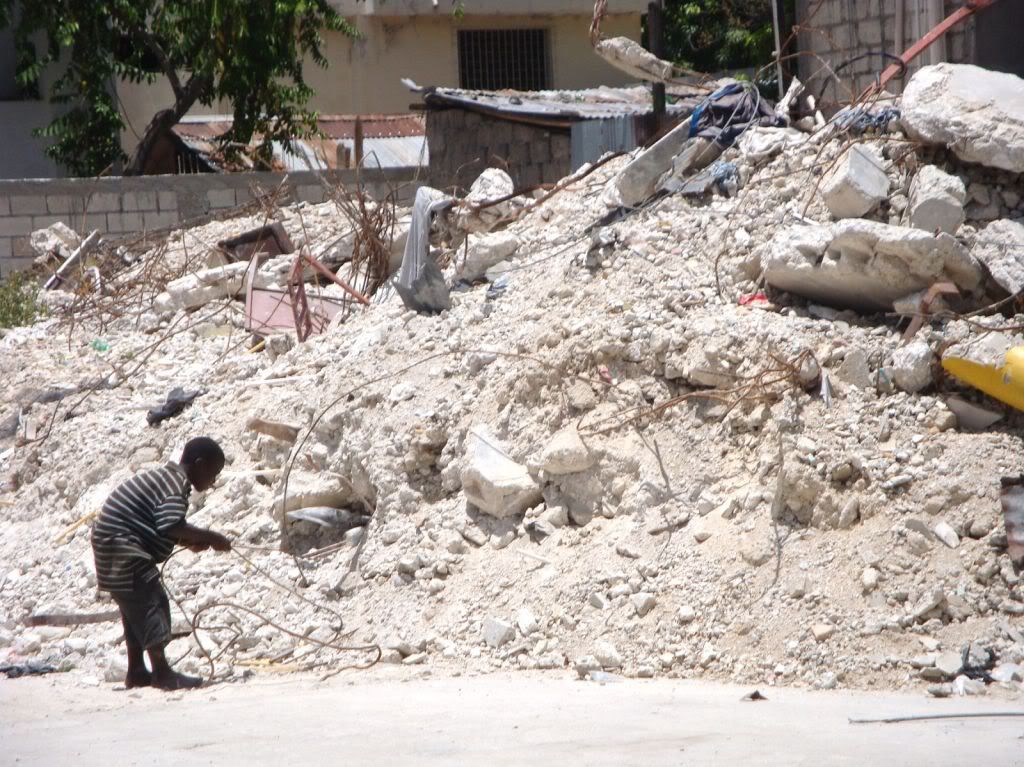
In an instant, so much was lost:

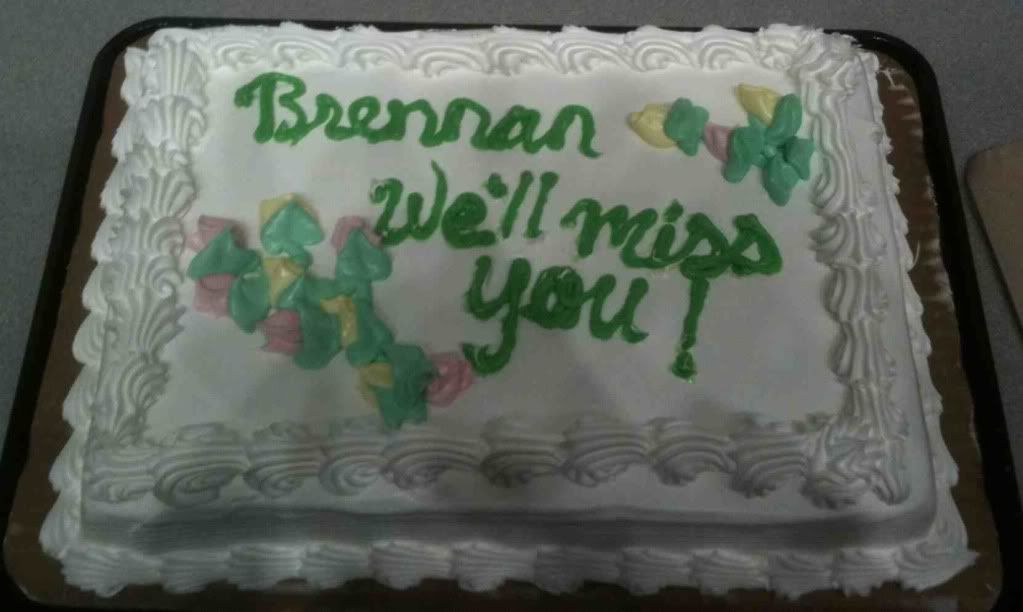
Wasn't in the mood for real goodbyes, but I received a sweet surprise send-off from the my classmates:

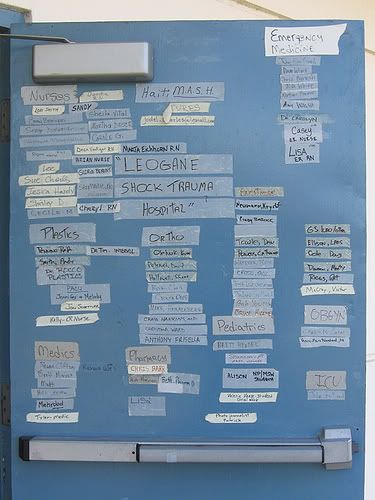
LSTH---the door to the nursing school where 3 dorm rooms were converted to ORs. In Cessna's landing on the highway outside Leogane, people showed up, taped on nametags, and worked as hard and long as humanly possible:

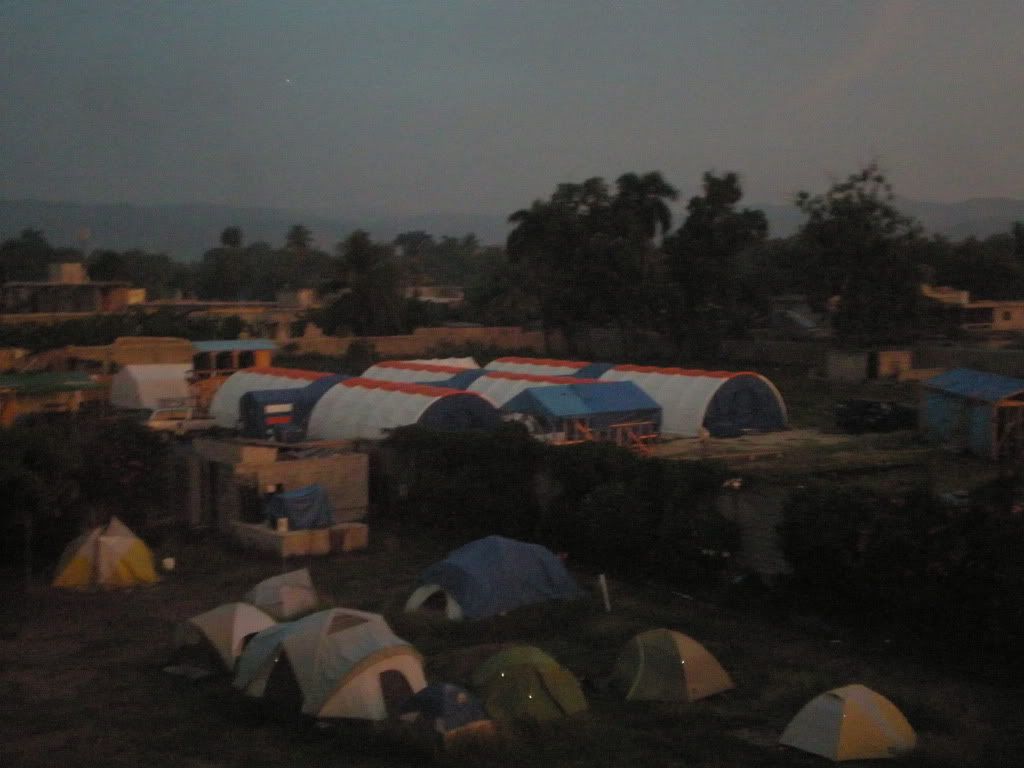
The same mishmash, heroic group--Jean Marc, Chris, Josh, Ralph...--got the tent pods set up a few weeks later:

Becoming more than just a trauma center, we were now a 24/7 general hospital. Dan's first on-call board offered a template, and we kept going. Working as hard and long as humanly possible. Or more:

Peter, my colleague, rose to every challenge. What we did is best expressed by a single Kreyòl word degaje "to make it work, to find a way":

Kristina (pictured) and Abbey (not) were my other comrades. One attempt at dancing Michael Jackson was more than enough:

Ralph Plastics & Mo Ortho bandaging 2-year-old Garvensly, badly burned but to fully recover with diligent care from our nurses & docs, and his grandmother:

Dan, Lars, "T", and Sony acting as transport team. Doubt that wearing shorts in the OR will be acceptable in the Mass General:

Robenson---translator, smooth operator, and my friend & protector:

Roosevelt---carpenter, and my other friend & protector:

Williamson---one special orphan:

Williamson---taken in by Manoucheka to join her son, Jonas, in a loving family:

Emily Ann---March 12, moments after birth, two-months premature, in respiratory distress. Her young mother abandoned her the next day:

Emily Ann---April 29, after two months in the Medishare NICU. 8 weeks old, 6 pounds:

Emily Ann---December, with her adopted mother, Natacha. (photo courtesy Steve Seidel). She's grown a bit:

Junior---was in constant pain since March 2009 moto accident, now in Maine recovering from a recent hip transplant arranged by Dr. Kevin. Junior calls himself my "gran frè" and is continuing his work as an artist:

Playing a little before the pain of leaving work unfinished in a place I love:

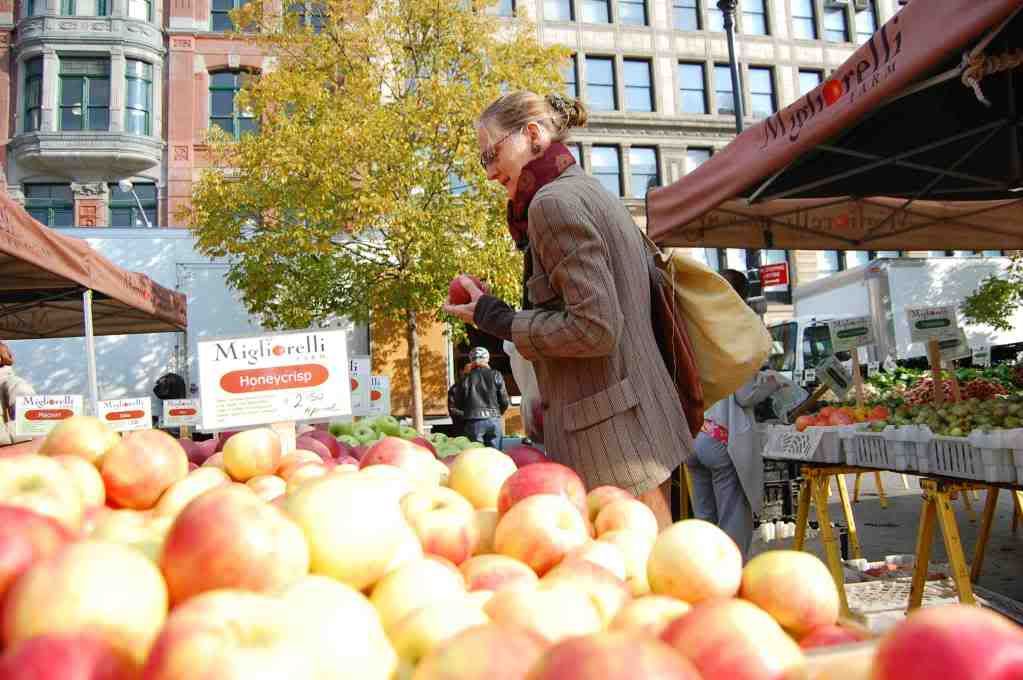
Yet, the Union Square Farmer's Market is another lovely place:

With impressive street performers:

Another life-enriching experience, the Coney Island Mermaid Parade:

Visiting my friends at the Farm of the Child in Honduras, impressed by their skills of cooking for mass community over a wood-stove:

Within and among El Salvador, Honduras, Guatemala, Nicaragua...this is how I rolled. Hours and hours and hours of rolling:

But sometimes there was entertainment:

Thousands of Salvadoran women, children, and men demanding justice in healthcare, never giving up in the long struggle:

So, while I witnessed much natural beauty (here Volcan Concepción, the one I climbed/stumbled up):

...The human beauty was far greater (girls dancing for the San Geronimo festival in Masaya, Nica):

Leaving mi familia:

To return to my family:

And to the Farmer's Market:

And our view:

We had a happy Christmas---even saw the Radio City Rockettes!

December 26, it started snowing. A lot. With thunder cracking and lightning flashing. Wikipedia "thundersnow":

Being our last night after a two-year NY hurrah, however, we still dressed up and went to Brooklyn for dinner (check out the chocolate bridge dessert):

And so in order to find (thank goodness) a subway home, we tromped ten blocks through windy 15-inch drifts:


Tomorrow is not only a new year, but the 207th anniversary of a land of slaves winning freedom---a new beginning since marked by much abuse, yet still a story of pride, and courage:

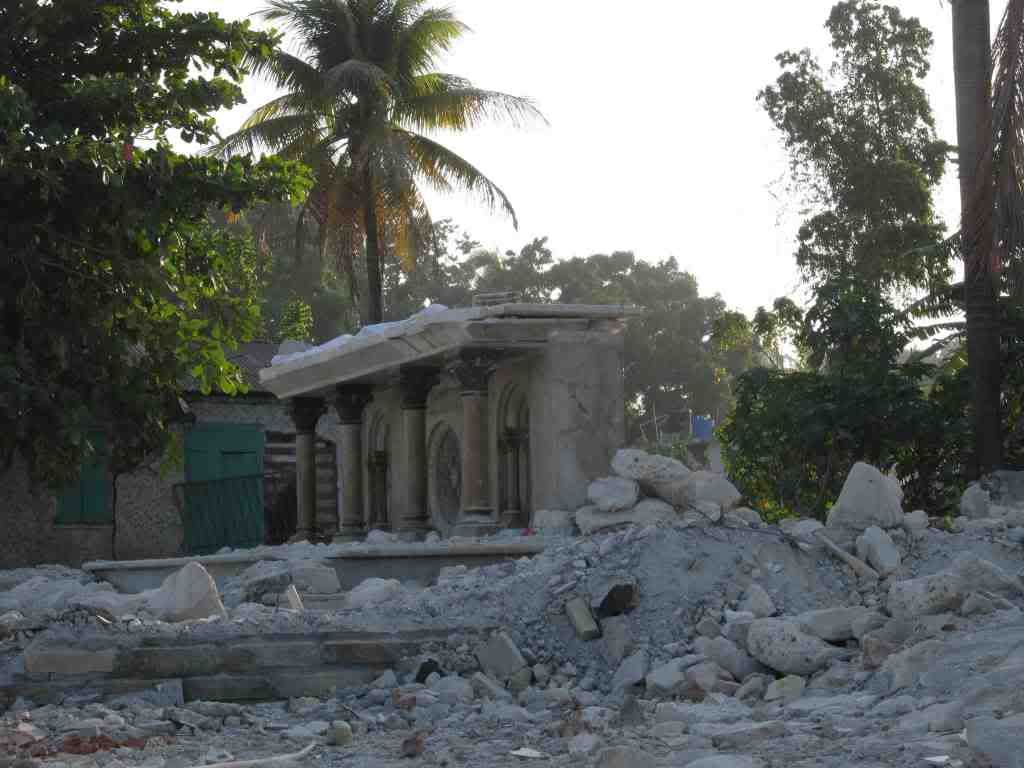
The St Rose de Lima church in Leogane collapsed completely, except the altar. People kept gathering around it, with hope and love. What was built, destroyed. Daily harm continues, ever stronger. But perhaps not everything lies in ruins:

In an instant, so much was lost:
Wasn't in the mood for real goodbyes, but I received a sweet surprise send-off from the my classmates:
LSTH---the door to the nursing school where 3 dorm rooms were converted to ORs. In Cessna's landing on the highway outside Leogane, people showed up, taped on nametags, and worked as hard and long as humanly possible:
The same mishmash, heroic group--Jean Marc, Chris, Josh, Ralph...--got the tent pods set up a few weeks later:
Becoming more than just a trauma center, we were now a 24/7 general hospital. Dan's first on-call board offered a template, and we kept going. Working as hard and long as humanly possible. Or more:
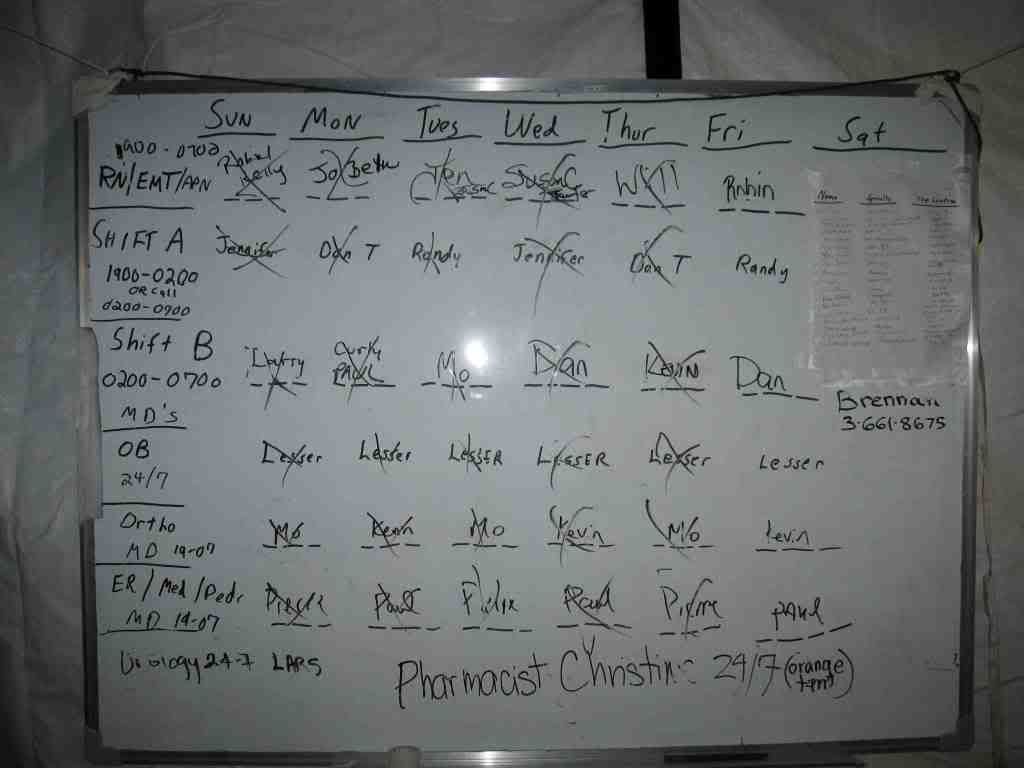
Peter, my colleague, rose to every challenge. What we did is best expressed by a single Kreyòl word degaje "to make it work, to find a way":
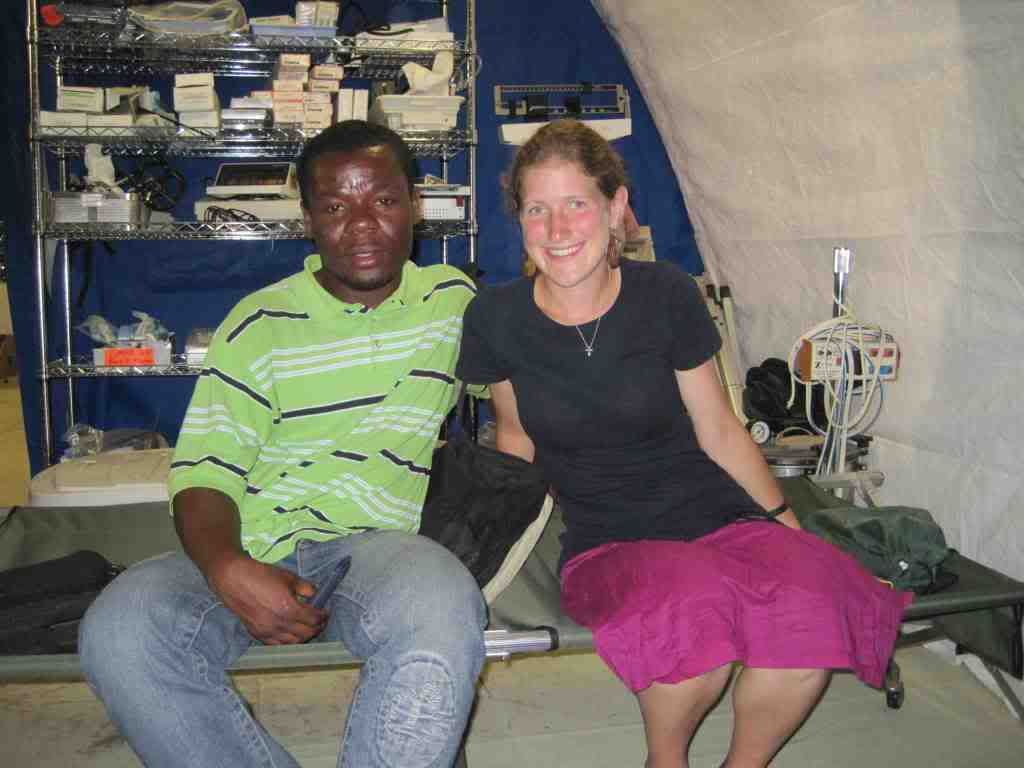
Kristina (pictured) and Abbey (not) were my other comrades. One attempt at dancing Michael Jackson was more than enough:
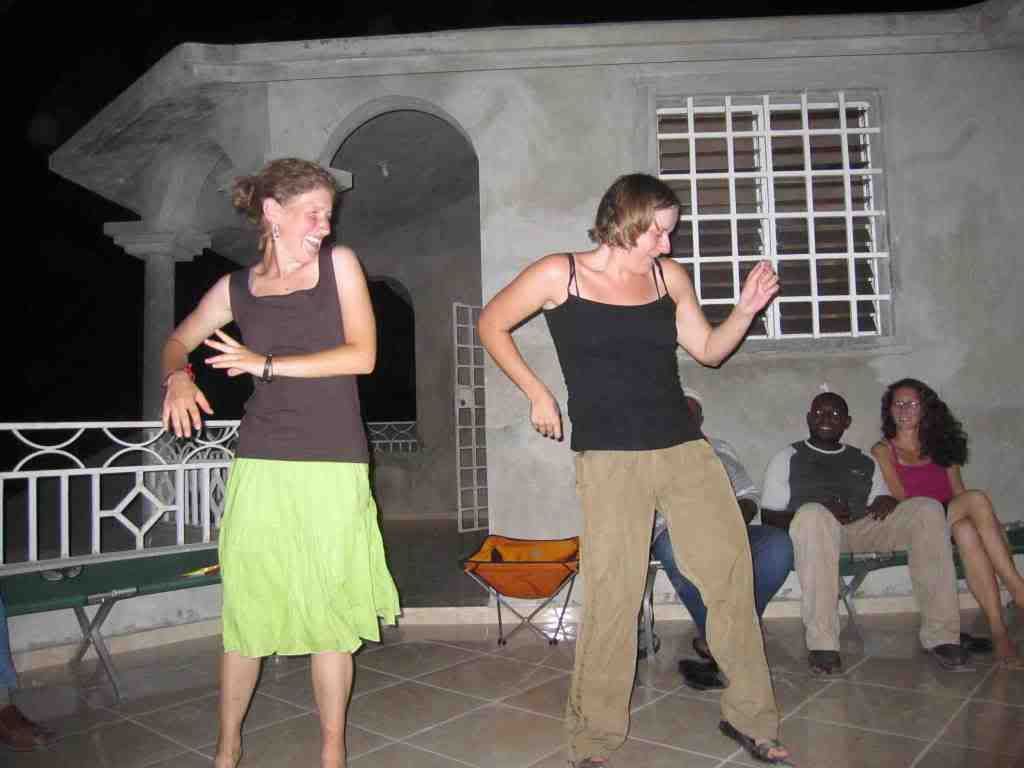
Ralph Plastics & Mo Ortho bandaging 2-year-old Garvensly, badly burned but to fully recover with diligent care from our nurses & docs, and his grandmother:
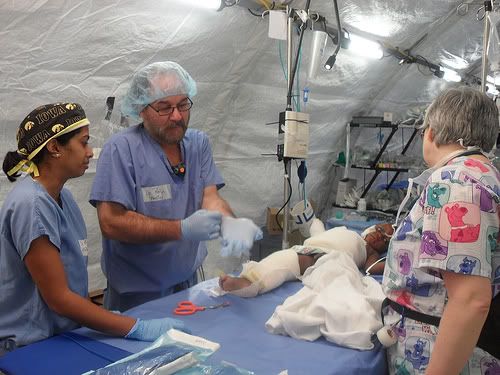
Dan, Lars, "T", and Sony acting as transport team. Doubt that wearing shorts in the OR will be acceptable in the Mass General:
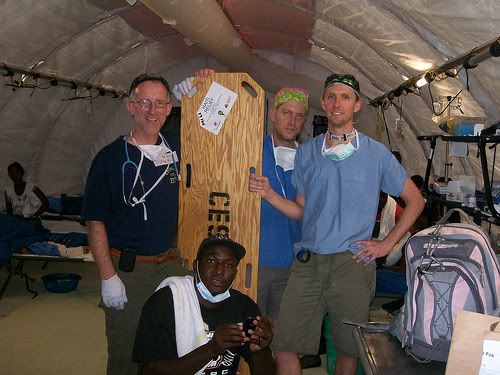
Robenson---translator, smooth operator, and my friend & protector:

Roosevelt---carpenter, and my other friend & protector:
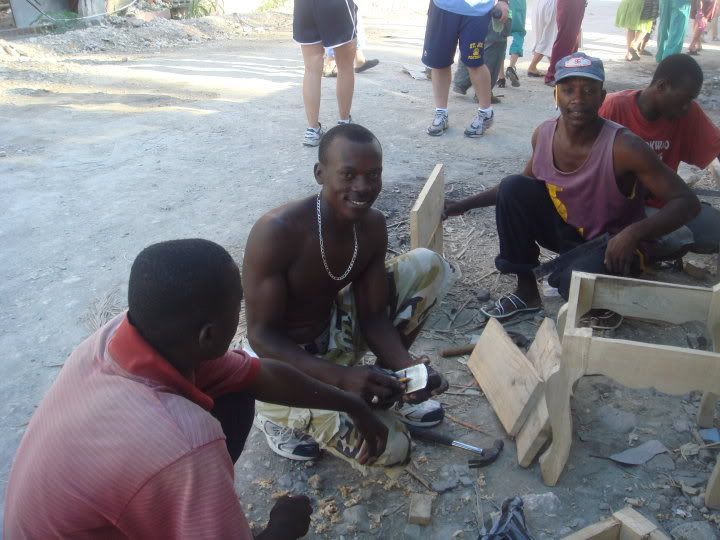
Williamson---one special orphan:
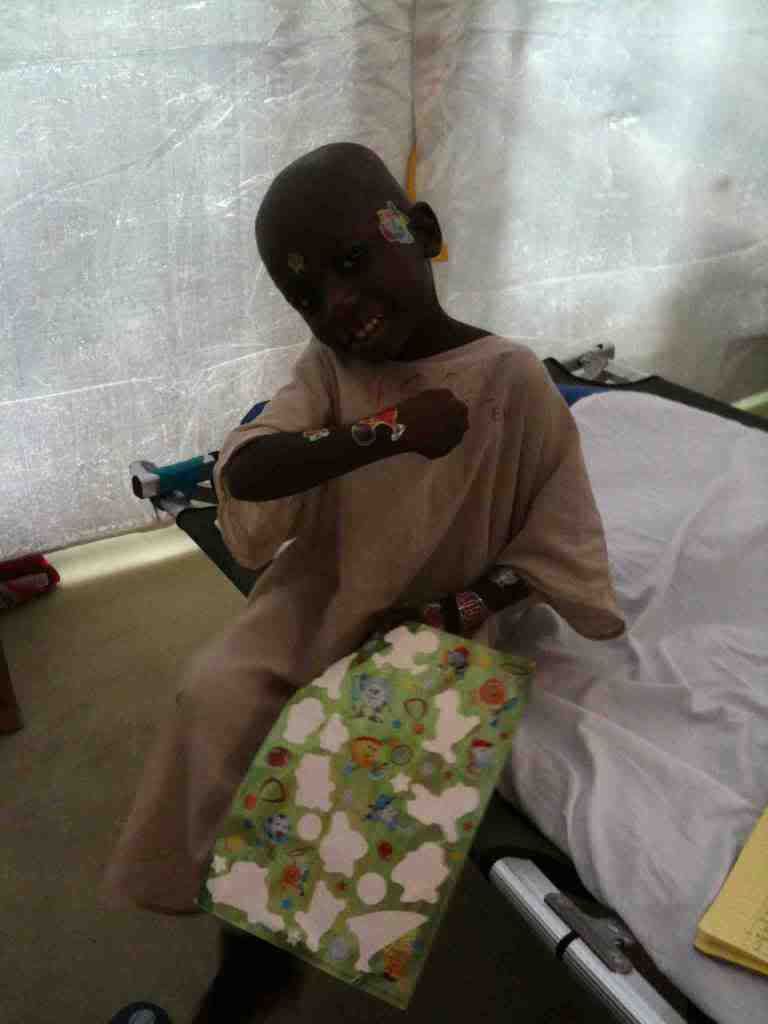
Williamson---taken in by Manoucheka to join her son, Jonas, in a loving family:
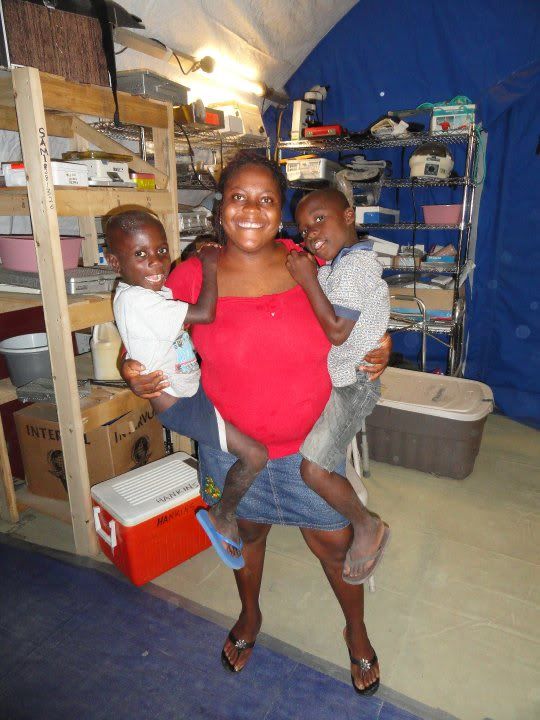
Emily Ann---March 12, moments after birth, two-months premature, in respiratory distress. Her young mother abandoned her the next day:

Emily Ann---April 29, after two months in the Medishare NICU. 8 weeks old, 6 pounds:
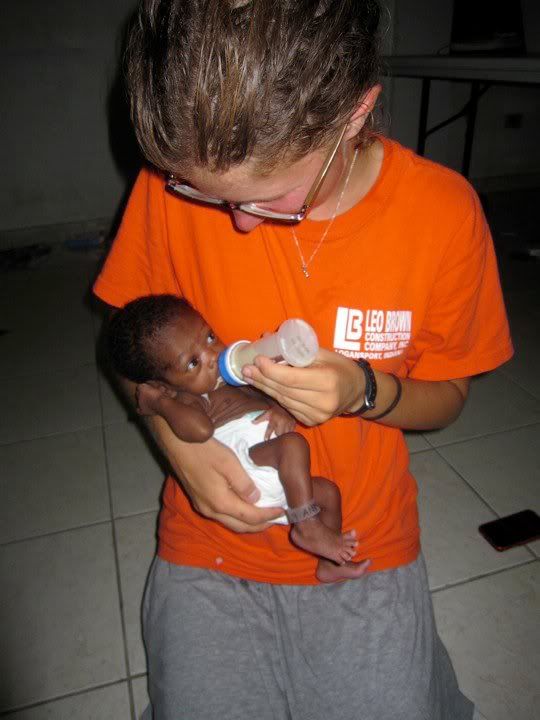
Emily Ann---December, with her adopted mother, Natacha. (photo courtesy Steve Seidel). She's grown a bit:
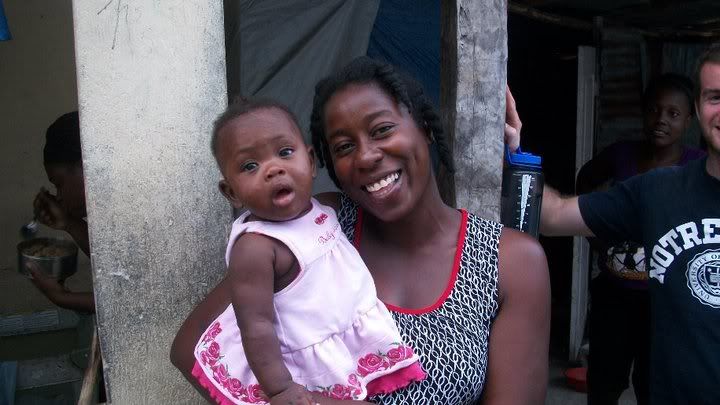
Junior---was in constant pain since March 2009 moto accident, now in Maine recovering from a recent hip transplant arranged by Dr. Kevin. Junior calls himself my "gran frè" and is continuing his work as an artist:
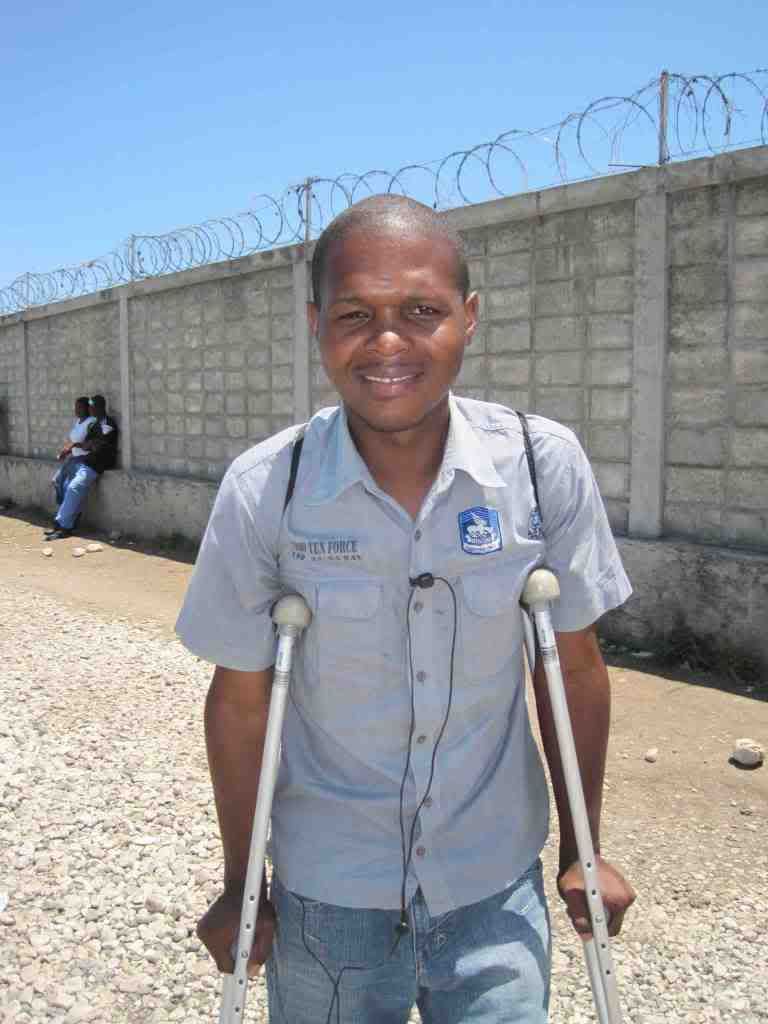
Playing a little before the pain of leaving work unfinished in a place I love:
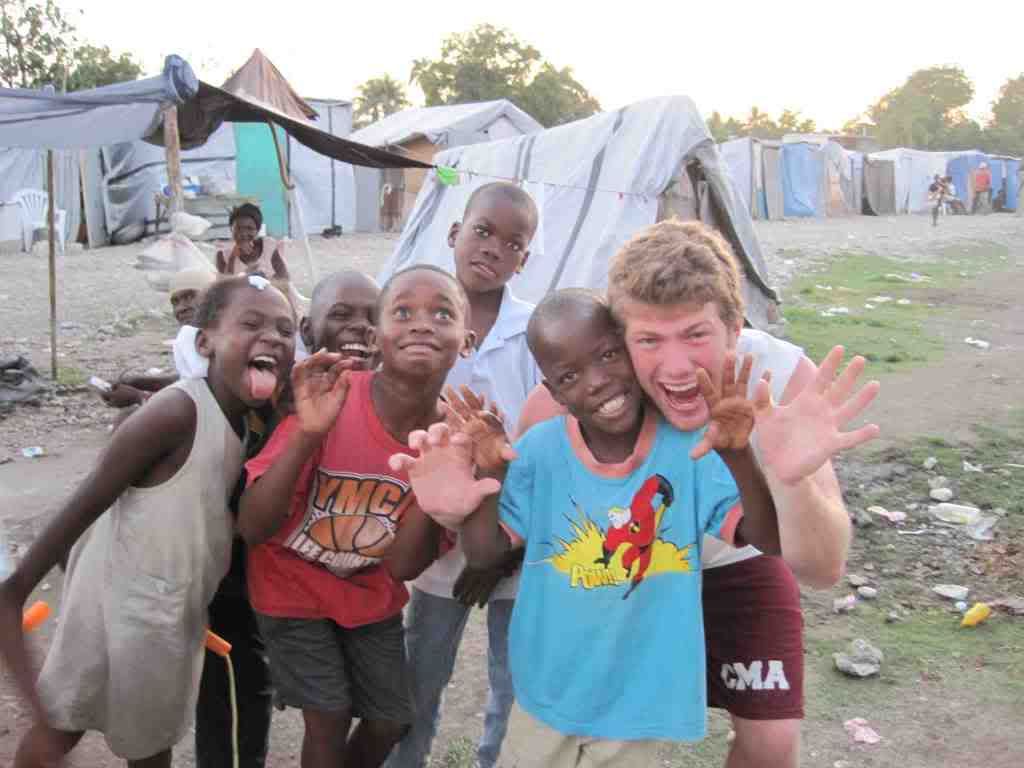
Yet, the Union Square Farmer's Market is another lovely place:
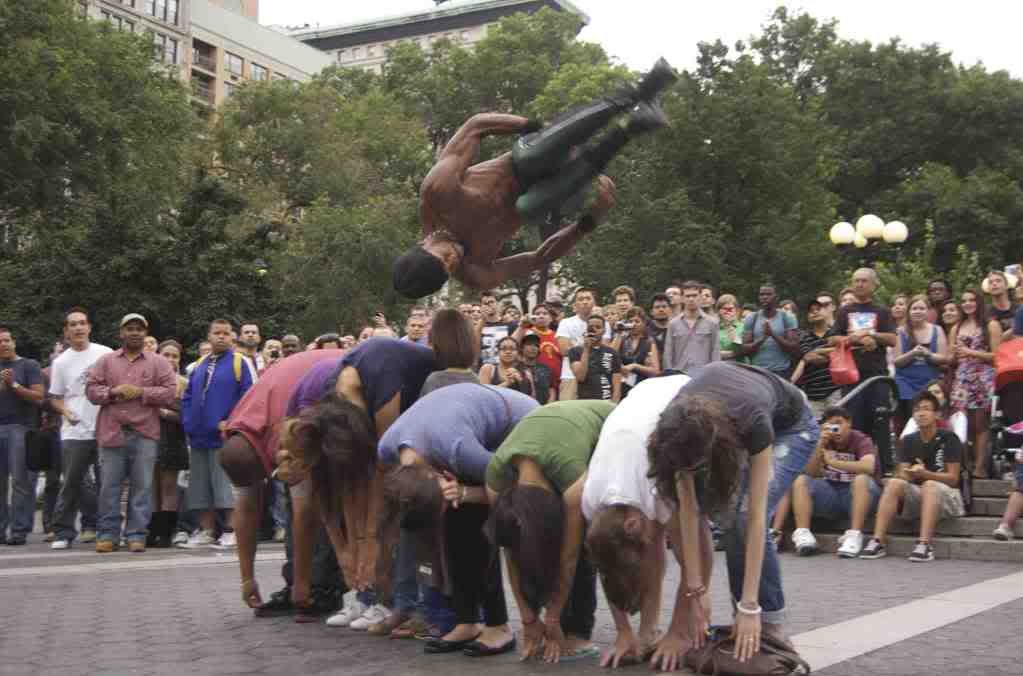
With impressive street performers:
Another life-enriching experience, the Coney Island Mermaid Parade:

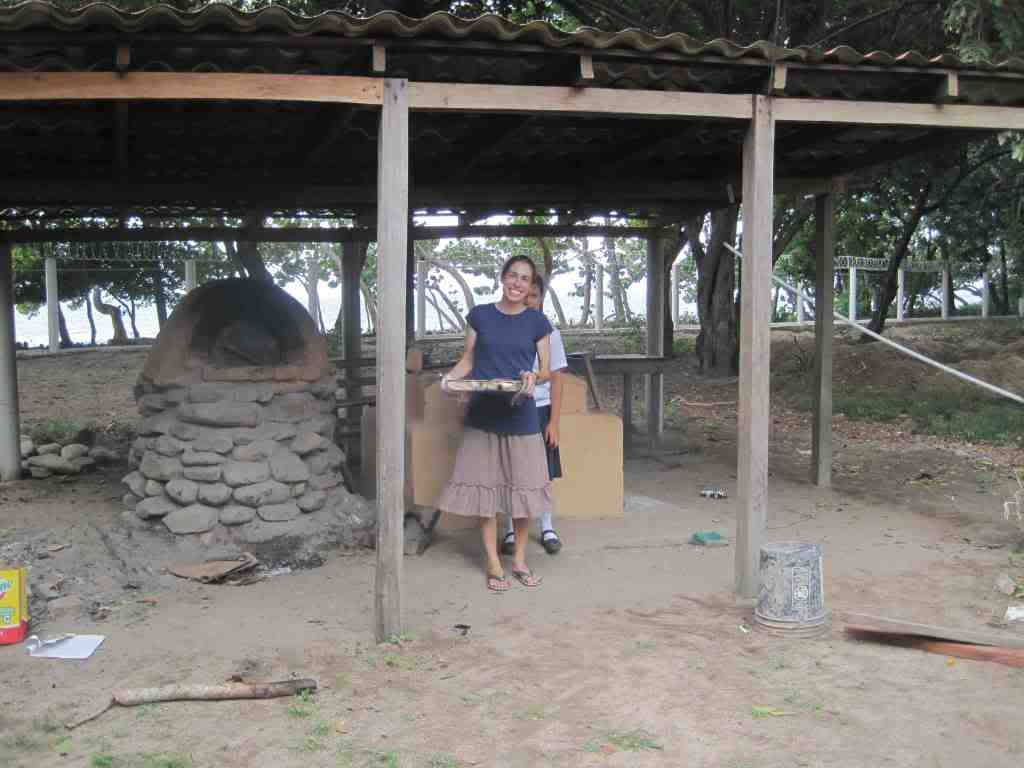
Visiting my friends at the Farm of the Child in Honduras, impressed by their skills of cooking for mass community over a wood-stove:
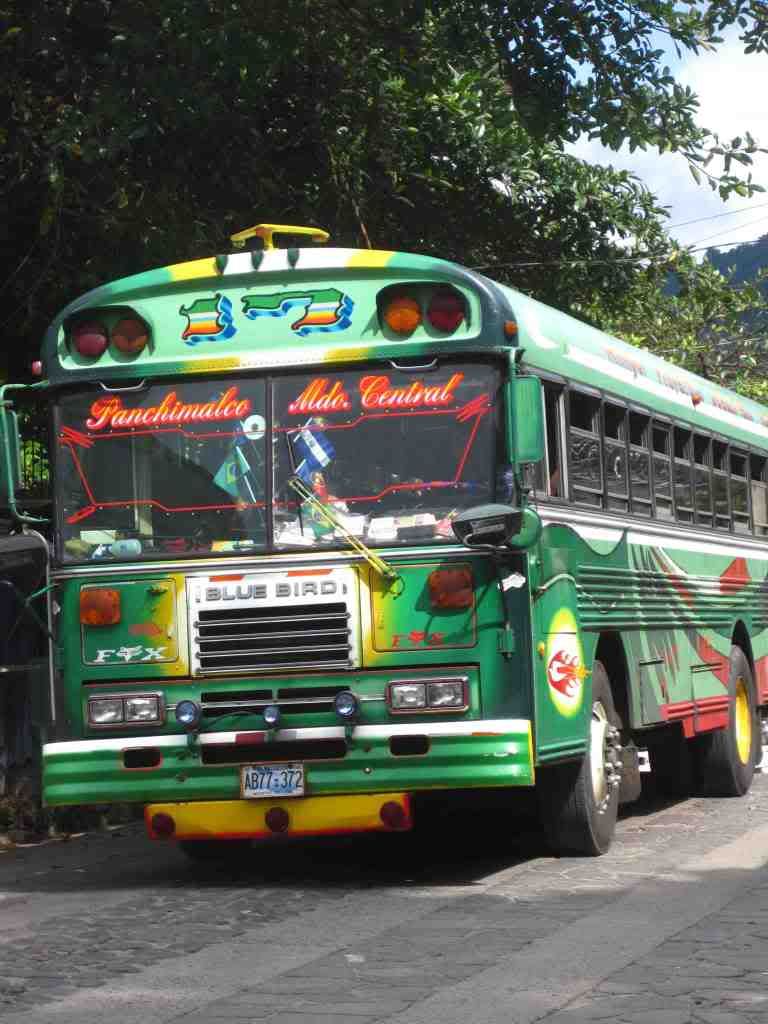
Within and among El Salvador, Honduras, Guatemala, Nicaragua...this is how I rolled. Hours and hours and hours of rolling:
But sometimes there was entertainment:
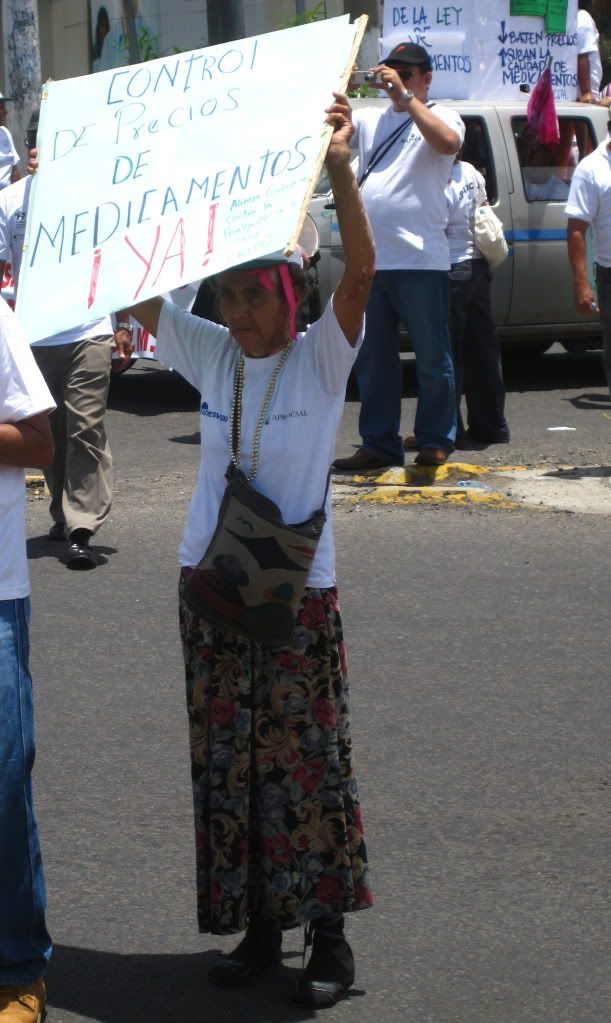
Thousands of Salvadoran women, children, and men demanding justice in healthcare, never giving up in the long struggle:
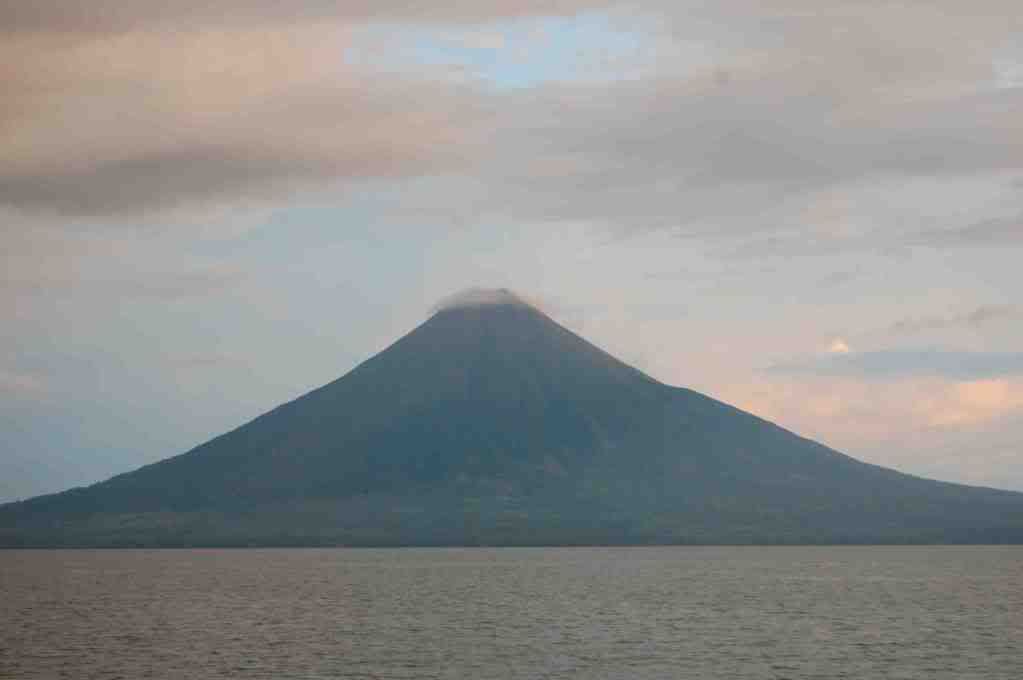
So, while I witnessed much natural beauty (here Volcan Concepción, the one I climbed/stumbled up):
...The human beauty was far greater (girls dancing for the San Geronimo festival in Masaya, Nica):

Leaving mi familia:
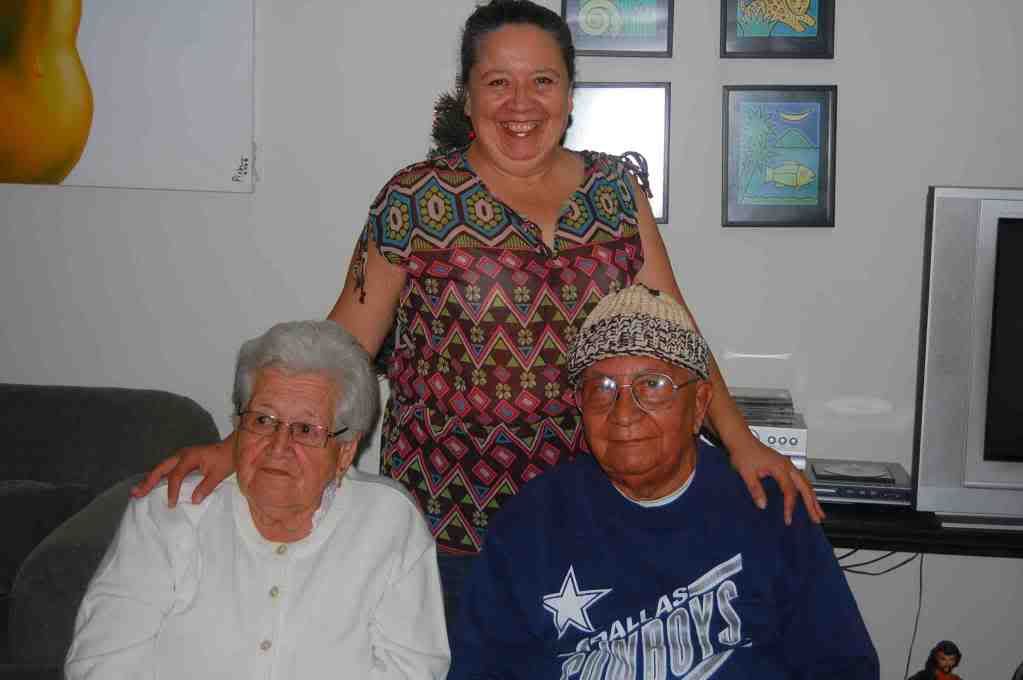
To return to my family:

And to the Farmer's Market:

And our view:

We had a happy Christmas---even saw the Radio City Rockettes!

December 26, it started snowing. A lot. With thunder cracking and lightning flashing. Wikipedia "thundersnow":

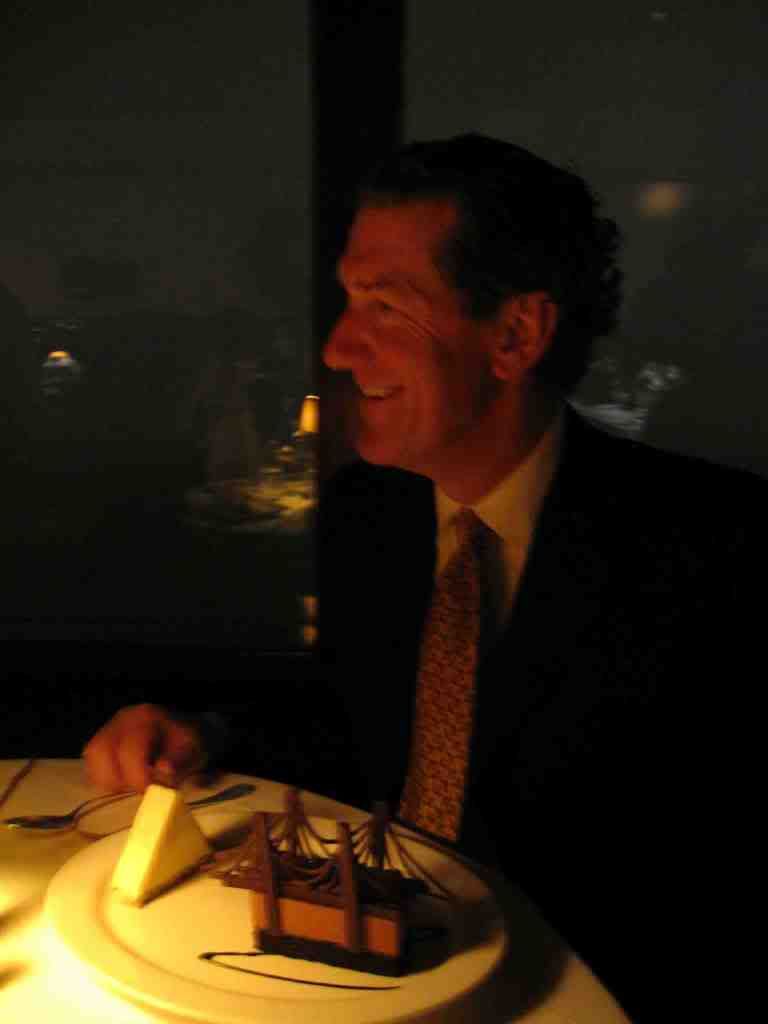
Being our last night after a two-year NY hurrah, however, we still dressed up and went to Brooklyn for dinner (check out the chocolate bridge dessert):
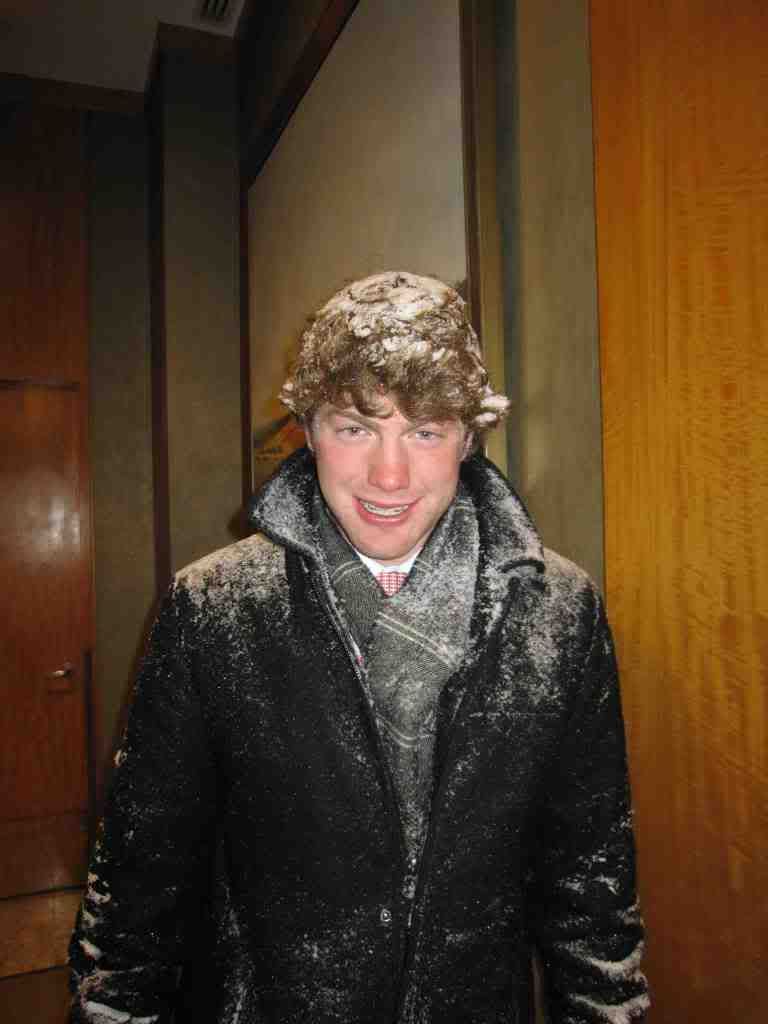
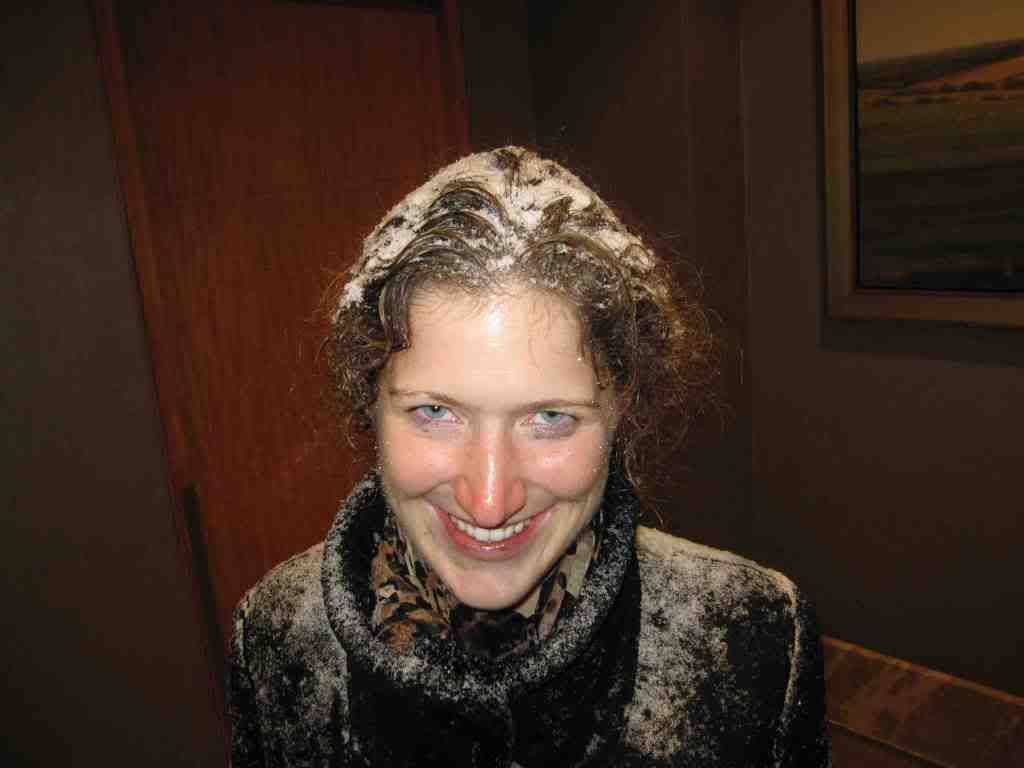
And so in order to find (thank goodness) a subway home, we tromped ten blocks through windy 15-inch drifts:
Tomorrow is not only a new year, but the 207th anniversary of a land of slaves winning freedom---a new beginning since marked by much abuse, yet still a story of pride, and courage:
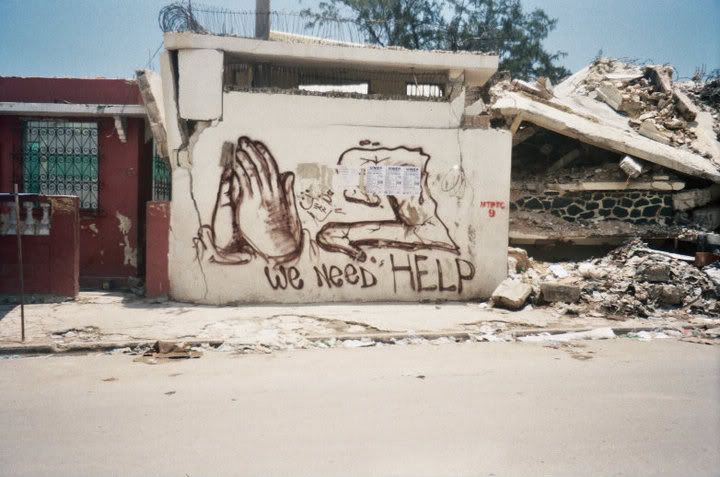
The St Rose de Lima church in Leogane collapsed completely, except the altar. People kept gathering around it, with hope and love. What was built, destroyed. Daily harm continues, ever stronger. But perhaps not everything lies in ruins:
Monday, December 20, 2010
The Year in Clouds & 6-word Memoirs
I just read the New York Times "Words of the Year," which has inspired me to think about the words that personally defined this year. Also, enjoying a requisite annual screening of Love Actually with Mom and Barrick prompts me to muse. [Watching the trailer alone is joyful.]
60 blog entries in 2010---so, what happened? Where did I go? Whom did I encounter? How was I moved, surprised...changed?
I probably can't answer those questions; instead, I took all I've written here over the last year and made a cloud, with word frequency reflected by size. Lots of conjunctions and adverbs, yet I was happy to see "People" as the clear leader. Along with "friend" "Haiti" "salvador" "Leogane" "Spanish" "family" "food" "team" "home" "help" "need" "care"..."hope"

(click to enlarge)
Let's not mince words, so I'll sum it up with only six. Remember that first attempt at shared "6-word memoirs" on this blog, now two years ago? See the first and second installments. Add your own narratives by comment here, or to just me by email. Simply ponder, because it is fun. My 2010 gave these to me:
"Leaping, stumbled; better to hold hands"
60 blog entries in 2010---so, what happened? Where did I go? Whom did I encounter? How was I moved, surprised...changed?
I probably can't answer those questions; instead, I took all I've written here over the last year and made a cloud, with word frequency reflected by size. Lots of conjunctions and adverbs, yet I was happy to see "People" as the clear leader. Along with "friend" "Haiti" "salvador" "Leogane" "Spanish" "family" "food" "team" "home" "help" "need" "care"..."hope"

(click to enlarge)
Let's not mince words, so I'll sum it up with only six. Remember that first attempt at shared "6-word memoirs" on this blog, now two years ago? See the first and second installments. Add your own narratives by comment here, or to just me by email. Simply ponder, because it is fun. My 2010 gave these to me:
"Leaping, stumbled; better to hold hands"
Sunday, December 12, 2010
11 and Counting...
Today was not dramatic. It marks 11-months since the pillars collapsed in a Caribbean country already pillaged by colonialism, militarism, and neoliberalism. Yet like yesterday, millions of Haitians simply awoke homeless, jobless, increasingly ill with cholera, and desperately seeking change. Despite the heartwrenching footage sure-to-be-shown by major media one month from today, January 12 will probably not bear transformative significance either.
In its annual review of top Google searches, Zeitgeist found Haiti to be 2010's "fastest riser" in the news category. [Justin Bieber topped multiple categories.] Haiti's climb to attention started 11 months ago today, with both news and public interest ebbing & gushing since then.
This week added a few new taglines of Haiti woes, which make litany-form in most stories: "riots" "civil unrest" "flaming barricades" "Sarah Palin"...[Regarding that last one, the Grizzly Hunter's brief chopper tour was apparently neither helpful to, nor noticed by, any Haitians.]
Our challenge is to not reduce Haiti to the headlines it will undoubtedly continue making. Rigorous reporting about the country often doesn't make major outlets, except AP's Jonathan Katz. Ansel Herz also does a stupendous job. As I've mentioned, I keep watching Twitter feeds from people on the ground, and re-tweeting the info to this blog. From Twitter to Wikileaks---now is the time for us to seek information at its source.
And so, helping give voice to this unremarkable anniversary, I'll offer three things:
1. A concise and honest look at the intensifying social mobilization (i.e. the foundation of the protests, expression of collective voice) in the Boston Haitian Reporter, written by Haiti grassroots human rights worker Melinda Miles.
2. Photoessay depicting the subtext of the last 11 months. It was produced by Bri Kouri Nouvèl Gaye, a Kreyòl newspaper that serves as the major way Haitian camp residents learn the world news that affects them.
3. I close with Melinda Miles' words from a recent blogpost as she refers to the above photoessay. They are an eloquent tribute to Haitians and an entreaty to us.
"When will things begin to change for the better? Haitians never expected to be rescued, and in recent months a new grassroots mobilization for change has begun to grow throughout the IDP camps, the neighborhoods of Port-au-Prince, and the peasant movements of the country as a whole. Through peaceful protests and popular university discussions, people are beginning to envision their own path for the future. Where those least affected by the quake have failed to solve the problems, those most affected by it cannot fail. They must create a new path forward, because Haitians cannot remain under tarps for years.
These photos are heartache in images; they depict the most painful moments of confrontation between nature and the frail human bodies under tarps, between powerful international forces and the valiant young people, women and men who demand something better for their lives. They take us from pain to protest to action. Hopelessness is a luxury Haitians cannot afford, and so the challenge is to spend a moment with the Haiti of today and still find the hope you need to get up and do something."
In its annual review of top Google searches, Zeitgeist found Haiti to be 2010's "fastest riser" in the news category. [Justin Bieber topped multiple categories.] Haiti's climb to attention started 11 months ago today, with both news and public interest ebbing & gushing since then.
This week added a few new taglines of Haiti woes, which make litany-form in most stories: "riots" "civil unrest" "flaming barricades" "Sarah Palin"...[Regarding that last one, the Grizzly Hunter's brief chopper tour was apparently neither helpful to, nor noticed by, any Haitians.]
Our challenge is to not reduce Haiti to the headlines it will undoubtedly continue making. Rigorous reporting about the country often doesn't make major outlets, except AP's Jonathan Katz. Ansel Herz also does a stupendous job. As I've mentioned, I keep watching Twitter feeds from people on the ground, and re-tweeting the info to this blog. From Twitter to Wikileaks---now is the time for us to seek information at its source.
And so, helping give voice to this unremarkable anniversary, I'll offer three things:
1. A concise and honest look at the intensifying social mobilization (i.e. the foundation of the protests, expression of collective voice) in the Boston Haitian Reporter, written by Haiti grassroots human rights worker Melinda Miles.
2. Photoessay depicting the subtext of the last 11 months. It was produced by Bri Kouri Nouvèl Gaye, a Kreyòl newspaper that serves as the major way Haitian camp residents learn the world news that affects them.
3. I close with Melinda Miles' words from a recent blogpost as she refers to the above photoessay. They are an eloquent tribute to Haitians and an entreaty to us.
"When will things begin to change for the better? Haitians never expected to be rescued, and in recent months a new grassroots mobilization for change has begun to grow throughout the IDP camps, the neighborhoods of Port-au-Prince, and the peasant movements of the country as a whole. Through peaceful protests and popular university discussions, people are beginning to envision their own path for the future. Where those least affected by the quake have failed to solve the problems, those most affected by it cannot fail. They must create a new path forward, because Haitians cannot remain under tarps for years.
These photos are heartache in images; they depict the most painful moments of confrontation between nature and the frail human bodies under tarps, between powerful international forces and the valiant young people, women and men who demand something better for their lives. They take us from pain to protest to action. Hopelessness is a luxury Haitians cannot afford, and so the challenge is to spend a moment with the Haiti of today and still find the hope you need to get up and do something."
Tuesday, November 30, 2010
World AIDS Day 2010
I'd like to share a 3-minute video produced by one of my new medical classmates, Eric Lu*. Features an exclusive conversation with Dr. Paul Farmer.
[Eric and a few friends started the Jubilee Project when they decided to busk in a NY subway station to raise money for Haiti relief. This modest act inspired a video-making movement that raises funds and awareness for many causes. Worth checking it out.]
Tomorrow night, my classmates (old & new) will join others for a rally on the Boston Common---"sounding a clear call" and "affirming their commitment" as President Obama encouraged. I would be honored to work with them in coming years, as our generation delivers healthcare to everyone who needs it.
[Eric and a few friends started the Jubilee Project when they decided to busk in a NY subway station to raise money for Haiti relief. This modest act inspired a video-making movement that raises funds and awareness for many causes. Worth checking it out.]
Tomorrow night, my classmates (old & new) will join others for a rally on the Boston Common---"sounding a clear call" and "affirming their commitment" as President Obama encouraged. I would be honored to work with them in coming years, as our generation delivers healthcare to everyone who needs it.
Sunday, November 28, 2010
The World is About to Turn?
Today begins the season of Advent in western Christianity. More than 2 billion people prepare to celebrate a new coming, and turning over the year. A priest reflected this morning that we should be mindful of our everyday actions in this changing world, one "of much suffering and brokenness, but that is surely pregnant with a new world." What kind of renewal?
My title above refers to an Irish folk hymn based on the subversive, revolutionary elements of the Biblical Magnificat, which Mary sang to Elizabeth as she waited to bear God's child. The refrain, "My heart shall sing of the day you bring. Let the fires of your justice burn. Wipe away all the tears, for the dawn draw near. And the world is about to turn."
Today Haiti voted for hope of a just turnover. Well, some of Haiti voted. Others boycotted, and still others were unable to reach the polls or turned away from them. By nearly all accounts, it was a disorganized and allegedly fraudulent "selection." Within 8-hours of the 6AM opening, 12 of 19 candidates held a joint press conference calling for annulment. This news is already all over your favorite media outlets, yet as usual, I respect Jonathan Katz's reporting for the AP. [He has lived in the country for 3 years..]
Issues include the following:
1. Deliberate yet unexplained exclusion of the popular Fanmi Lavalas party, among other flaws (including printing only half of the 400,000 requested national ID cards). In October, 44 members of U.S. Congress implored the State Dept to only support free & fair elections---and while late, there's still time to heed that advice. For Haiti politics aficionado's, this IJDH report is quite comprehensive.
2. Cholera. Reason enough to have postponed. Officials all admit estimates of the sick and dead are undershot; epidemic has yet to reach its peak; WHO is adjusting its projections upwards given that only 10% of the $164 million emergency appeal requested has been funded.
3. MINUSTAH---going on 5 years of what many Haitians view as militant occupation. The peacekeeping force has its own significant record of violence that includes open-firing into slums [embedded link is to one of my first blog posts in early 2007, for this particular human rights struggle was what first drew me into Haiti nearly 4 years ago. I suppose not much has changed.]
3.5 My friend Deepa works with a grassroots human rights group and wrote this excellent (concise!) update on how Haitians are responding to these issues...and how we can help their voices be heard.
4. Some irresponsible media coverage of all the above. More on this to follow via Twitter.
***One easy response: sign this petition listed on Change.org. It was started by a sharp new activist group in the Boston area called UnityAyiti, which has welcomed me into their ranks. Promise no strings attached or email deluge for signing.
As I continue working with UnityAyiti on watchdogging and advocacy, I'll post updates on Twitter (lest I overwhelm any subscribers to this blog). I will try to tweet solid Haiti news and analysis, as well as direct to good sources (i.e. Haitians and others doing the real work). So if the desire to read up on Haiti strikes, find my tweets on the right sidebar of this page http://oforthep.blogspot.com or at http://twitter.com/oforthep.
Note for the Twit-illit: you don't need an account to click on tweets or any links therein.
Today in Haiti, a new beginning did not emerge. Yet Haitians are still preparing for what they believe should rightly come to them, someday. They will keep toiling for the turning.
My title above refers to an Irish folk hymn based on the subversive, revolutionary elements of the Biblical Magnificat, which Mary sang to Elizabeth as she waited to bear God's child. The refrain, "My heart shall sing of the day you bring. Let the fires of your justice burn. Wipe away all the tears, for the dawn draw near. And the world is about to turn."
Today Haiti voted for hope of a just turnover. Well, some of Haiti voted. Others boycotted, and still others were unable to reach the polls or turned away from them. By nearly all accounts, it was a disorganized and allegedly fraudulent "selection." Within 8-hours of the 6AM opening, 12 of 19 candidates held a joint press conference calling for annulment. This news is already all over your favorite media outlets, yet as usual, I respect Jonathan Katz's reporting for the AP. [He has lived in the country for 3 years..]
Issues include the following:
1. Deliberate yet unexplained exclusion of the popular Fanmi Lavalas party, among other flaws (including printing only half of the 400,000 requested national ID cards). In October, 44 members of U.S. Congress implored the State Dept to only support free & fair elections---and while late, there's still time to heed that advice. For Haiti politics aficionado's, this IJDH report is quite comprehensive.
2. Cholera. Reason enough to have postponed. Officials all admit estimates of the sick and dead are undershot; epidemic has yet to reach its peak; WHO is adjusting its projections upwards given that only 10% of the $164 million emergency appeal requested has been funded.
3. MINUSTAH---going on 5 years of what many Haitians view as militant occupation. The peacekeeping force has its own significant record of violence that includes open-firing into slums [embedded link is to one of my first blog posts in early 2007, for this particular human rights struggle was what first drew me into Haiti nearly 4 years ago. I suppose not much has changed.]
3.5 My friend Deepa works with a grassroots human rights group and wrote this excellent (concise!) update on how Haitians are responding to these issues...and how we can help their voices be heard.
4. Some irresponsible media coverage of all the above. More on this to follow via Twitter.
***One easy response: sign this petition listed on Change.org. It was started by a sharp new activist group in the Boston area called UnityAyiti, which has welcomed me into their ranks. Promise no strings attached or email deluge for signing.
As I continue working with UnityAyiti on watchdogging and advocacy, I'll post updates on Twitter (lest I overwhelm any subscribers to this blog). I will try to tweet solid Haiti news and analysis, as well as direct to good sources (i.e. Haitians and others doing the real work). So if the desire to read up on Haiti strikes, find my tweets on the right sidebar of this page http://oforthep.blogspot.com or at http://twitter.com/oforthep.
Note for the Twit-illit: you don't need an account to click on tweets or any links therein.
Today in Haiti, a new beginning did not emerge. Yet Haitians are still preparing for what they believe should rightly come to them, someday. They will keep toiling for the turning.
Saturday, November 13, 2010
Gives Me Hope Today
One: what tho' the odds were great, the Irish pulled a victory over 14-ranked Utah. On TV, I watched the senior players end years of adversity with golden helmets raised in pride---including law student / O-lineman Chris Stewart, who unsurprisingly was a big hit carrying Haitian children on his shoulders when he visited Leogane last year. Celebrate on Rockne's field, senior class. Celebrate on out into the world.
Two: Aung San Suu Kyi was released. May she inspire the world to struggle for real freedom in Burma.
Three: Dr. Raj Panjabi delivered perhaps the most inspiring message I've heard in 2010. 6-minute video below (really, it's awesome, I watched it 3 times). He co-founded Tiyatien Health in rural, post-war Liberia. I'm honored to call him colleague, teammate.
Two: Aung San Suu Kyi was released. May she inspire the world to struggle for real freedom in Burma.
Three: Dr. Raj Panjabi delivered perhaps the most inspiring message I've heard in 2010. 6-minute video below (really, it's awesome, I watched it 3 times). He co-founded Tiyatien Health in rural, post-war Liberia. I'm honored to call him colleague, teammate.
Thursday, November 11, 2010
Ignorance & Apathy
A football coach confronts his quarterback about an embarrassing string of losses. "You don't know the darn playbook, and you can't seem to rally the team when it comes down to that last drive in the 4th-quarter! What's the bigger problem, son, your ignorance or your apathy?"
The young leader ponders for a moment and then responds, solemnly, "I don't know, and I don't really care."
--------
Thank you, to a few kind readers who answered my not-so-rhetorical question. I decided not to go to Haiti. My original intention had been to simply visit with Haitian friends. Now is not the right moment for that. I also truly have nothing to offer... So from El Salvador, I came straight home: out of respect for the Haitians and foreigners working so fervently in the instant of crisis--an instant which today, November 12, has lasted for 10 months.
I am usually ignorant, and often apathetic. I sit in a comfortable house, consume too much, and pity my selfish concerns. Then memory triggers a craving for what's important, and I spend the last several hours learning and feeling.
--------
Synopsis of what we should know:
1. MSF Head of Mission, Stefano Zannini, reports in today's cholera post: "It’s a really worrying situation for us at the moment. All of the hospitals in Port-au-Prince are overflowing with patients and we’re seeing seven times the total amount of cases we had three days ago."
Rising count, at an increasing rate: 724 dead and 11,125 hospitalized. More unknown cases, surely.
2. Hurricane Tomas did cause significant flooding damage in Leogane. It's hard to quantify other than to say it was, bad. Some of you have seen photos from our common friends--shared & re-shared--across Facebook. Ansel Herz also provides an account.
3. Most of us have read about the "1.15 billion" pledged by the U.S. for reconstruction, money that seems to be playing hooky. (not to be confused with 1-billion spent in initial emergency aid). What's the story? Jonathan Katz from the AP concisely explains what any non-apathetic citizen ought to realize about our process of helping others.
Basically, Congress took its leisurely time preparing the appropriations bill which hit Obama's desk July 29. Authorization, the next step, happened Sept 20. And just now, the State Department learns it must ensure "accountability" from the Haitian government before the 1.3 million people living in tents could hope for an upgrade to a slab of concrete & some sturdy plywood. Katz also reports that reconstruction contractors with plans ready to go are losing interest.
Time is not only a matter of life and death. It's money, as well.
This predicament is only one step removed from all of us apathetic couch potatoes. It is our representative government, after all. Yesterday, we honored veterans in remembering the path to democracy. We could also remember that our civic duty did not end when polls closed last Tuesday.
4. If you're not discreetly edging away from my soapbox by now, this article is also thought-provoking "Humanitarian Crisis or Crisis of Humanitarianism?"
5. Let's be not ignorant of the good, as well: in searching the old OneResponse & Cluster sites, I just read a Partners in Health situation report that was more detailed than any analogous UN briefing I've read over the last 10 months. PIH has deep knowledge and deep response. Following their mission of "Doing Whatever It Takes," they have stayed with their Haitian community through the persistent crisis of injustice. They know and they care, so they can respond.
--------
I am probably like that poor quarterback. Yet, despite disappointment and seeming futility, he is at least honest. Wherever I am, even 1844 miles from where I wanted to be at this moment, I hope to acknowledge my ignorance & apathy. And then do something about it.

The young leader ponders for a moment and then responds, solemnly, "I don't know, and I don't really care."
--------
Thank you, to a few kind readers who answered my not-so-rhetorical question. I decided not to go to Haiti. My original intention had been to simply visit with Haitian friends. Now is not the right moment for that. I also truly have nothing to offer... So from El Salvador, I came straight home: out of respect for the Haitians and foreigners working so fervently in the instant of crisis--an instant which today, November 12, has lasted for 10 months.
I am usually ignorant, and often apathetic. I sit in a comfortable house, consume too much, and pity my selfish concerns. Then memory triggers a craving for what's important, and I spend the last several hours learning and feeling.
--------
Synopsis of what we should know:
1. MSF Head of Mission, Stefano Zannini, reports in today's cholera post: "It’s a really worrying situation for us at the moment. All of the hospitals in Port-au-Prince are overflowing with patients and we’re seeing seven times the total amount of cases we had three days ago."
Rising count, at an increasing rate: 724 dead and 11,125 hospitalized. More unknown cases, surely.
2. Hurricane Tomas did cause significant flooding damage in Leogane. It's hard to quantify other than to say it was, bad. Some of you have seen photos from our common friends--shared & re-shared--across Facebook. Ansel Herz also provides an account.
3. Most of us have read about the "1.15 billion" pledged by the U.S. for reconstruction, money that seems to be playing hooky. (not to be confused with 1-billion spent in initial emergency aid). What's the story? Jonathan Katz from the AP concisely explains what any non-apathetic citizen ought to realize about our process of helping others.
Basically, Congress took its leisurely time preparing the appropriations bill which hit Obama's desk July 29. Authorization, the next step, happened Sept 20. And just now, the State Department learns it must ensure "accountability" from the Haitian government before the 1.3 million people living in tents could hope for an upgrade to a slab of concrete & some sturdy plywood. Katz also reports that reconstruction contractors with plans ready to go are losing interest.
Time is not only a matter of life and death. It's money, as well.
This predicament is only one step removed from all of us apathetic couch potatoes. It is our representative government, after all. Yesterday, we honored veterans in remembering the path to democracy. We could also remember that our civic duty did not end when polls closed last Tuesday.
4. If you're not discreetly edging away from my soapbox by now, this article is also thought-provoking "Humanitarian Crisis or Crisis of Humanitarianism?"
5. Let's be not ignorant of the good, as well: in searching the old OneResponse & Cluster sites, I just read a Partners in Health situation report that was more detailed than any analogous UN briefing I've read over the last 10 months. PIH has deep knowledge and deep response. Following their mission of "Doing Whatever It Takes," they have stayed with their Haitian community through the persistent crisis of injustice. They know and they care, so they can respond.
--------
I am probably like that poor quarterback. Yet, despite disappointment and seeming futility, he is at least honest. Wherever I am, even 1844 miles from where I wanted to be at this moment, I hope to acknowledge my ignorance & apathy. And then do something about it.

Tuesday, November 2, 2010
Rain pours through my eyes
A few minutes ago, I was writing about Nicaragua when thunder and heavy rain began. I stopped to watch it pelt and blow through the open cabana area of the hostel. Then my eyes became moist, then wet.
Have been closely reading Haiti cholera news, and situation reports from the health cluster emails to which I´m still (uselessly) subscribed. And now following Tomas.
http://www.weather.com/outlook/videos/tropical-storm-tomas-strengthens-6584#6584
Whatever the storm´s technical strength or path, think of heavy downpour when living under a tarp or a tent, one that´s falling apart from 10 months of heat and wind and rain. Text messages on your cellphone (you can receive, but don´t have money for outgoing calls) that warn of a nationwide deadly diarrheal epidemic, urging you to use only safe water sources. But you don´t have access to those in your under-serviced IDP camp or (worse, perhaps) the isolated area near the ruins of your home, where you´ve tried to rebuild life. Plus, being unemployed and pregnant or sick or caring for kids--whatever else is in the cup of your life. The cup that the rainwater floods over.
I´m scheduled to go to Haiti directly from El Salvador, in 6 days. Embassy restrictions on non-essential travelers may change this. But even if I have a choice, should I go??? (Very much not a rhetorical question, if you know me) I have nothing to offer. Not even tarps, or cups.
It´s still raining hard here.
Have been closely reading Haiti cholera news, and situation reports from the health cluster emails to which I´m still (uselessly) subscribed. And now following Tomas.
http://www.weather.com/outlook/videos/tropical-storm-tomas-strengthens-6584#6584
Whatever the storm´s technical strength or path, think of heavy downpour when living under a tarp or a tent, one that´s falling apart from 10 months of heat and wind and rain. Text messages on your cellphone (you can receive, but don´t have money for outgoing calls) that warn of a nationwide deadly diarrheal epidemic, urging you to use only safe water sources. But you don´t have access to those in your under-serviced IDP camp or (worse, perhaps) the isolated area near the ruins of your home, where you´ve tried to rebuild life. Plus, being unemployed and pregnant or sick or caring for kids--whatever else is in the cup of your life. The cup that the rainwater floods over.
I´m scheduled to go to Haiti directly from El Salvador, in 6 days. Embassy restrictions on non-essential travelers may change this. But even if I have a choice, should I go??? (Very much not a rhetorical question, if you know me) I have nothing to offer. Not even tarps, or cups.
It´s still raining hard here.
Nica, pt. 2
*Fri 10/29: I finished my last post talking about Che Guevara. Inspired by reading him, as I took a boat from Isla de Ometepe to the hot but pleasant transit town of Rivas, I decided to dress as Che for Halloween. In the Rivas market, I found a motorcycle toy as a prop--and used a red bandana to tie back my currently-long & unkempt hair, drew a scraggly eyeliner-beard. The party? In Managua, where I arrived by early evening to stay with my friend Thomas, who has lived there for a year already through the Jesuit Volunteer Corp. Was soon attacked in a tight squeeze from my other friend Alicia, who promptly whisked me off to her barrio to zealously introduce me to a long string of her Nicaraguan friends. (if you know her, you can picture this)
Here are my friends´ blogs, sharing as nod to their good work, and deep insights about a place which to them is, home.
Thomas:http://thomasweiler.blogspot.com/
Alicia:http://spiderwebsyresistencia.blogspot.com/
Back to Halloween. Thomas & his JV compañeros threw a fantastic fiesta in the evening, with 20 or so Nica and expat friends who I loved meeting. Many recognized me, but more likely due to their radical political leanings than to my costume´s quality. Carousing continued into 2AM guitar sing-along of "Casas de Carton," and The Beatles.
*Sat 10/30: Tranquilo day, but did accompany Thomas to the market to help carry groceries...and witness his frijol & verdura-buying skills. We had time for many good conversations--the brief moment when our different paths become tangent. I´m learning more and more how important these meetings are, even when bending the curve takes a little extra effort.
Alicia joined us in the evening, to enjoy Thomas´ dinner of ayote and "gallo pinto" (Nica-speak for the always-yummy rice&beans). Then we headed with the full group of JVs to Cuidad Sandino, about an hour outside the capital. A few of their Nicaraguan friends recently opened a bar & club that´s women/family-friendly (i.e. not like the sad places of machistic drunkenness and desolation so prevalent elswhere). This night was a benefit concert / open-mic in support of an injured coworker at the local NGO where many attendees worked. Another great night of dancing and joy. Thomas kept telling me that most weekends are much more boring. But I was happy to ride the party wave!
*Sun 10/31-11/2: I´ve been in León for a few days. Called the "capital de la revolución," it was both the sight where Rigoberto López-Pérez assasinated dictator General Somoza in 1956 (then replaced by two dicator sons while Rigoberto was machine-gunned by the national guard) as well as a location of heavy fighting later up the final offensive and victory of the FSLN on July 19, 1979. The national University is also located here, contributing to the city´s importance in the resistance movement...and meaning there are lots of great murals here.
At the revolution museum, my personal tour-guide was a former guerillero. He rattled off 70years of historical detail, with colorful stories, for more than an hour. Only at the end did he tell me that he no longer formerly worked at the museo, but had come in to visit friends there, and still offered to teach me. Fighting in jungle when he was 20, he now farms export shrimp for a Spanish company.
I´ve enjoyed time to take in the city in a more relaxed way. Ironically, my months-long "don´t worry, be happy" M.O. ended in my hostel hammock, as I began reading a BRS Anatomy Review book I brought back from the U.S. several weeks ago. As I swing in a net of dismay from my completely-lost knowledge, my new classmates are learning, a lot...right now. My tranquilo time needs to end soon.
Yet, today´s excursion, likely my last hurrah of stereotypical tourism for awhile, was...VOLCANO-BOARDING. Yes, it´s what you´re imagining. It. Was. Great. A dozen happy backpackers (one quite hungover, glad I wasn´t in her shoes) jumped in the back of an orange truck for service directo across bumpy roads to the base of Cerro Negro. At 160yrs, it is the youngest volcano in Central America and also one of most active. The frequent eruptions, coupled with a characteristic east-to-west wind pattern, has created a rocky side, and a steep smooth ash side. We each carried jumpsuits, googles, and wooden boards in a hike up the rocky side. Ground at the summit was hot to the touch. We received instructions on using the boards (sled style, b/c standing would be wayyy too hard); the most important rule was "don´t smile or scream....or you´ll swallow ash."
Two-by-two, we pushed off. 700-meters at a 41-degree incline. Even though I fell off my board twice, the descent took less than a minute. Record speed in this activity is 80km/h, but my near-40 still felt pretty darn fast. Ash-covered faces and bodies, we rode back to the Bigfoot hostel and were offered free mojitos to celebrate.
I´ve loved Nicaragua, but my time in Central America is on a less-than-a-week countdown, so I need to return to El Salv to say goodbye there. Rather than take the directo TicaBus from Managua, I´m going to split up the 10-plus hour travel time by taking local buses through the three countries, and walking the borders. Estimated 7-10 buses passing from León to Chinandega to Guasuale to Choluteca to El Amatillo to Santa Rosa de Lima and finally, San Salvador. Will probably send a final note from there.
Here are my friends´ blogs, sharing as nod to their good work, and deep insights about a place which to them is, home.
Thomas:http://thomasweiler.blogspot.com/
Alicia:http://spiderwebsyresistencia.blogspot.com/
Back to Halloween. Thomas & his JV compañeros threw a fantastic fiesta in the evening, with 20 or so Nica and expat friends who I loved meeting. Many recognized me, but more likely due to their radical political leanings than to my costume´s quality. Carousing continued into 2AM guitar sing-along of "Casas de Carton," and The Beatles.
*Sat 10/30: Tranquilo day, but did accompany Thomas to the market to help carry groceries...and witness his frijol & verdura-buying skills. We had time for many good conversations--the brief moment when our different paths become tangent. I´m learning more and more how important these meetings are, even when bending the curve takes a little extra effort.
Alicia joined us in the evening, to enjoy Thomas´ dinner of ayote and "gallo pinto" (Nica-speak for the always-yummy rice&beans). Then we headed with the full group of JVs to Cuidad Sandino, about an hour outside the capital. A few of their Nicaraguan friends recently opened a bar & club that´s women/family-friendly (i.e. not like the sad places of machistic drunkenness and desolation so prevalent elswhere). This night was a benefit concert / open-mic in support of an injured coworker at the local NGO where many attendees worked. Another great night of dancing and joy. Thomas kept telling me that most weekends are much more boring. But I was happy to ride the party wave!
*Sun 10/31-11/2: I´ve been in León for a few days. Called the "capital de la revolución," it was both the sight where Rigoberto López-Pérez assasinated dictator General Somoza in 1956 (then replaced by two dicator sons while Rigoberto was machine-gunned by the national guard) as well as a location of heavy fighting later up the final offensive and victory of the FSLN on July 19, 1979. The national University is also located here, contributing to the city´s importance in the resistance movement...and meaning there are lots of great murals here.
At the revolution museum, my personal tour-guide was a former guerillero. He rattled off 70years of historical detail, with colorful stories, for more than an hour. Only at the end did he tell me that he no longer formerly worked at the museo, but had come in to visit friends there, and still offered to teach me. Fighting in jungle when he was 20, he now farms export shrimp for a Spanish company.
I´ve enjoyed time to take in the city in a more relaxed way. Ironically, my months-long "don´t worry, be happy" M.O. ended in my hostel hammock, as I began reading a BRS Anatomy Review book I brought back from the U.S. several weeks ago. As I swing in a net of dismay from my completely-lost knowledge, my new classmates are learning, a lot...right now. My tranquilo time needs to end soon.
Yet, today´s excursion, likely my last hurrah of stereotypical tourism for awhile, was...VOLCANO-BOARDING. Yes, it´s what you´re imagining. It. Was. Great. A dozen happy backpackers (one quite hungover, glad I wasn´t in her shoes) jumped in the back of an orange truck for service directo across bumpy roads to the base of Cerro Negro. At 160yrs, it is the youngest volcano in Central America and also one of most active. The frequent eruptions, coupled with a characteristic east-to-west wind pattern, has created a rocky side, and a steep smooth ash side. We each carried jumpsuits, googles, and wooden boards in a hike up the rocky side. Ground at the summit was hot to the touch. We received instructions on using the boards (sled style, b/c standing would be wayyy too hard); the most important rule was "don´t smile or scream....or you´ll swallow ash."
Two-by-two, we pushed off. 700-meters at a 41-degree incline. Even though I fell off my board twice, the descent took less than a minute. Record speed in this activity is 80km/h, but my near-40 still felt pretty darn fast. Ash-covered faces and bodies, we rode back to the Bigfoot hostel and were offered free mojitos to celebrate.
I´ve loved Nicaragua, but my time in Central America is on a less-than-a-week countdown, so I need to return to El Salv to say goodbye there. Rather than take the directo TicaBus from Managua, I´m going to split up the 10-plus hour travel time by taking local buses through the three countries, and walking the borders. Estimated 7-10 buses passing from León to Chinandega to Guasuale to Choluteca to El Amatillo to Santa Rosa de Lima and finally, San Salvador. Will probably send a final note from there.
Sunday, October 31, 2010
Nica, pt. 1
Happy Halloween! So here´s the first installment of a Nicaragua travelogue, choc-full of silly tourist meanderings. Sadly, not nearly as witty as a Bill Bryson account.
*Sat 10/23: Sat in the San Salvador terminal at 9AM waiting for the 8AM departure bus (ETA Managua 6:30PM). I chatted with a Nicaraguan lady, who tried to convince me we would make it there no later than 4. We arrive at 10:30, and I stayed overnight in the capital.
*Sun 10/24: caught a minibus to the nearby town of Masaya, and jumped off when I saw clusters of children dancing in traditional costume around the parque central. Each group of dancers is surrounded by dozens of family & strangers admiring the dances (they were great!). I took photos for awhile. Everyone I talked with gave a slightly different explanation, but the gist was a 3-MONTH celebration for their patron San Jerónimo. I also walked through the nationally-known artisan market, fighting temptation to buy from every jewelry-vender. Then I made my way to the neighboring village of Catarina, one of the charming "pueblos blancos" where Masaya´s artesania is made. I sat for awhile at a lookout point over the crater-lake Lago Apoyo. As lovely as the natural beauty was the fiesta atmosphere of Nicaraguan families who also came to enjoy the view.
At the bus stop (i.e. unmarked spot by the highway where people say buses pass), I met 3 nice guys, fellow-travelers, and together we took an indirect, rainy route to Granada--a tourist hotspot in Central America (like Antigua in Guate, but not as pleasant, IMO). So obviously, there was a Norteamericana style sports bar, where my fleeting friends and I stopped to watch the Vikings vs. Packers.
*Mon 10/25: explored the colonial buildings & streets & markets. I wasn´t able to see the convent where St. Bartolome de Las Casas wrote his famous 1525 letter--with its outlandish proposal that indigenous people were, in fact, people and therefore deserving of human rights. I remember reading that letter in Fr. Gutierrez´s class, long ago... After a full morning, I´d seen most of Granada´s highlights, so I caught the 4-hr boatride across Lago Nicaragua to the Isla de Ometepe.
We (handful of backpackers) arrived at the island´s muddy docs well after dark. I had called ahead to a lodge hotel on a coffee finca, and was lucky to find others going the same general direction to share a taxi. Taxi = standing crammed in the back of a pickup as it rumbled for an hour over the rocky, muddy roads. Rocky & muddy enough that at some point, we had to change to a heavier-duty pickup. A quick bout of sickness was gaining fuerza in my belly at this most convenient time, so I had a moment of low & lonely self-pity. I was thrilled to finally curl up under a cosy mosquito net in my lodge bed.
*Tues 10/26: as I regained my full capacity, enjoyed a morning at the lovely Finca Magdelena. Met a handsome French photographer who entertained me by talking about his research and personal experience with "lucid dreaming." Worth googling, as trivia knowledge if nothing else. Later, I made my way around the island to the port town of Moyogalpa to arrange an excursion for the next day.
*Wed 10/27: climbed Volcan Concepción, one of two volcanoes on the island; at 1630-meters, it´s the second highest volcano in Nicaragua. With an Icelandic guy and our guide, started from 100m above sea level. While still in thick vegetation, our guide pointed out trees of glue & howler monkeys, among other things. My compañero decided to stop once we passed the treeline, so I continued with our guide. Unfortunately, once we reached 1400, he decided the sulfuric gases were too strong--the volcano is in its annual-ish period of eruption--so we couldn´t summit. In retrospect, that was probably for the better, because as he watched me frequently fall *UP*, the guide told me, "you will have real problems getting down." He was very right. I slid & slipped all the way down, scraping my hands, and swearing profusely at my sore knees and clumsy feet. Moutain climbing may never be an activity I can do with any skill, but I loved this challenge.
*Thurs 10/28: rented a moped to explore the island (30x10km for a size ref). Of course it was a big lavish & touristy (though 22USD/day was a great deal). And, soy turista! When again in my life would I be in place with a chance to ride the wind through such natural and human beauty? Hands down, awesome day.
While traveling this week, I am reading Che Guevara´s "Motorcycle Diaries" (in Spanish). Coincidental to read it now...since Che was also a 23-year-old medical student, on a yearlong leave, when he drove around South America. His perceptions and vision are naturally far deeper than anything I´ve yet conceptualized myself. But I like thinking about the path we are all riding: a journey of young minds & hearts realizing the desperation of our times, resolving to be part of history. To struggle forever, and live the memory of those we encounter along the way.
A wise man said something along these lines yesterday, at the "Rally to Restore Sanity and/or Fear." So Nica-continuation pending, will close with the words of Jon Stewart:
“We know instinctively as a people that if we are to get through the darkness and back into the light, we have to work together. And sometimes the light at the end of the tunnel isn’t the promised land. Sometimes it’s just New Jersey. But we do it anyway, together.”
*Sat 10/23: Sat in the San Salvador terminal at 9AM waiting for the 8AM departure bus (ETA Managua 6:30PM). I chatted with a Nicaraguan lady, who tried to convince me we would make it there no later than 4. We arrive at 10:30, and I stayed overnight in the capital.
*Sun 10/24: caught a minibus to the nearby town of Masaya, and jumped off when I saw clusters of children dancing in traditional costume around the parque central. Each group of dancers is surrounded by dozens of family & strangers admiring the dances (they were great!). I took photos for awhile. Everyone I talked with gave a slightly different explanation, but the gist was a 3-MONTH celebration for their patron San Jerónimo. I also walked through the nationally-known artisan market, fighting temptation to buy from every jewelry-vender. Then I made my way to the neighboring village of Catarina, one of the charming "pueblos blancos" where Masaya´s artesania is made. I sat for awhile at a lookout point over the crater-lake Lago Apoyo. As lovely as the natural beauty was the fiesta atmosphere of Nicaraguan families who also came to enjoy the view.
At the bus stop (i.e. unmarked spot by the highway where people say buses pass), I met 3 nice guys, fellow-travelers, and together we took an indirect, rainy route to Granada--a tourist hotspot in Central America (like Antigua in Guate, but not as pleasant, IMO). So obviously, there was a Norteamericana style sports bar, where my fleeting friends and I stopped to watch the Vikings vs. Packers.
*Mon 10/25: explored the colonial buildings & streets & markets. I wasn´t able to see the convent where St. Bartolome de Las Casas wrote his famous 1525 letter--with its outlandish proposal that indigenous people were, in fact, people and therefore deserving of human rights. I remember reading that letter in Fr. Gutierrez´s class, long ago... After a full morning, I´d seen most of Granada´s highlights, so I caught the 4-hr boatride across Lago Nicaragua to the Isla de Ometepe.
We (handful of backpackers) arrived at the island´s muddy docs well after dark. I had called ahead to a lodge hotel on a coffee finca, and was lucky to find others going the same general direction to share a taxi. Taxi = standing crammed in the back of a pickup as it rumbled for an hour over the rocky, muddy roads. Rocky & muddy enough that at some point, we had to change to a heavier-duty pickup. A quick bout of sickness was gaining fuerza in my belly at this most convenient time, so I had a moment of low & lonely self-pity. I was thrilled to finally curl up under a cosy mosquito net in my lodge bed.
*Tues 10/26: as I regained my full capacity, enjoyed a morning at the lovely Finca Magdelena. Met a handsome French photographer who entertained me by talking about his research and personal experience with "lucid dreaming." Worth googling, as trivia knowledge if nothing else. Later, I made my way around the island to the port town of Moyogalpa to arrange an excursion for the next day.
*Wed 10/27: climbed Volcan Concepción, one of two volcanoes on the island; at 1630-meters, it´s the second highest volcano in Nicaragua. With an Icelandic guy and our guide, started from 100m above sea level. While still in thick vegetation, our guide pointed out trees of glue & howler monkeys, among other things. My compañero decided to stop once we passed the treeline, so I continued with our guide. Unfortunately, once we reached 1400, he decided the sulfuric gases were too strong--the volcano is in its annual-ish period of eruption--so we couldn´t summit. In retrospect, that was probably for the better, because as he watched me frequently fall *UP*, the guide told me, "you will have real problems getting down." He was very right. I slid & slipped all the way down, scraping my hands, and swearing profusely at my sore knees and clumsy feet. Moutain climbing may never be an activity I can do with any skill, but I loved this challenge.
*Thurs 10/28: rented a moped to explore the island (30x10km for a size ref). Of course it was a big lavish & touristy (though 22USD/day was a great deal). And, soy turista! When again in my life would I be in place with a chance to ride the wind through such natural and human beauty? Hands down, awesome day.
While traveling this week, I am reading Che Guevara´s "Motorcycle Diaries" (in Spanish). Coincidental to read it now...since Che was also a 23-year-old medical student, on a yearlong leave, when he drove around South America. His perceptions and vision are naturally far deeper than anything I´ve yet conceptualized myself. But I like thinking about the path we are all riding: a journey of young minds & hearts realizing the desperation of our times, resolving to be part of history. To struggle forever, and live the memory of those we encounter along the way.
A wise man said something along these lines yesterday, at the "Rally to Restore Sanity and/or Fear." So Nica-continuation pending, will close with the words of Jon Stewart:
“We know instinctively as a people that if we are to get through the darkness and back into the light, we have to work together. And sometimes the light at the end of the tunnel isn’t the promised land. Sometimes it’s just New Jersey. But we do it anyway, together.”
Thursday, October 21, 2010
Listening & Learning
Class today was a trip to the botanical gardens, an impressive collection of local biodiversity and gifts from around the world. Wilmer, my teacher, related the cultural and medicinal importance of the plants, including the various methods of using "florifundia," a highly halucenogenic flower. We parted ways as usual, saying "nos vemos mañana." And then, with a thud of sadness, I realized tomorrow will be our last class together.
On Saturday, I´m heading to Nicaragua (11hr busing, 2 border crossings) to spend a week traveling there before meeting up with my friends, Thomas and Alicia, in Managua the following weekend. I doubt I´ll encounter whatever exotic challenges the cast of "Survivor:Nicaragua" is currently facing...but you never know. Then directly to Honduras to visit another of my dearest Domer friends, who´s working in the eastern Olancho region. Return to San Salv around Nov 4.
My random birthplace (i.e. not in the Salvadoran campo) gave me "intellectual lens" with with to approach everything from cell biology to...the Salvadoran campo. I want badly to go beyond the books, to learn to live in some solidarity with peoples´ real experiences here. But starting from "level nada" in Spanish with limited time, much of what I´ve learned about this country has come through indirect accounts. A few highlights of my education, just from the past week:
-An open lecture on neoliberalism & the Salvadoran economy at the Nacional Univ, where the speaker urged a packed auditorium that "ya no seamos subjetos de historia." I hope, also, that this country´s youth can start standing up to the oligarchy-friendly policies of past generations.
-Reading Fidel Castro´s recent daily sections in a leftist newspaper. He dedicated the last week to publishing chapter synopses of Bob Woodward´s "Obama´s Wars" book, which he felt so important for the Latin American world to understand that he had it rush-translated.
-Listening to a few hours of taped war testimonies, offered by people in a small pueblo where Wilmer once assisted a couple anthropologists. He had to help me a good bit with the campesino Spanish, but from the memories I heard...I can´t even imagine...
-Actually...Every single day in class, since early August, I´ve learned something new from Wilmer about El Salvador´s past & present. I could only directly encounter the tiniest sliver, but am so grateful to have had the opportunity to listen.
A couple fun side notes:
-Went to an Aventura concert on Friday. The Dominican band fuses tradicional "bachata" music with pop-rap, and is hugely popular--as I now recognize their songs on about every third bus ride. The 20,000ish stadium was packed, with whole crowd belting with the band for the entire 3-hrs of the show. My friend and I were in the nosebleed section. Yet, during the song entitled "Take Your Clothes Off Slowly," I could still see the mosh-pit hurl a hot pink bra at the lead singer. Most well known hit: http://www.youtube.com/watch?v=A1h3iPtpY18
-Lovely evening yesterday hosted at a girls´ home in the neighborhood of Mexicanos (site of the gang-led bus burning this summer). My friend, Jenna, lived there one summer, and maintains the connection now that she´s back here on a Fulbright. Playing Jenga and Twister and Jacks--despite my still-very-shaky Spanish--brought much affection from the sweet (and smart!) girls...
-Returned home a couple days ago to see a big bus right outside our house. Was puzzled, because buses never pass direct through the neighborhood, and this wasn´t even one of the nearest route. Mystery solved a moment later when my dear house parents got off...the driver was giving the older couple doorside service. I hurried to take my madre´s grocery bag from her, and as I did so, she grasped my forearm to steady herself in a way that reminded me, emotionally & almost viscerally, of how my Grandma would use me as support 10 years ago. Mi madre had just been named "Reina" of their neighborhood social group at an annual lunch. As she showed me her crown, shedding glitter everywhere, she remarked, "78 years of such hard work...it´s about time!"
-My favorite internet cafe, just went from playing MLK´s "I Have a Dream" speech to a techno version "Bad Romance." Big improvement over last week´s "We Wish You a Merry Christmas."
On Saturday, I´m heading to Nicaragua (11hr busing, 2 border crossings) to spend a week traveling there before meeting up with my friends, Thomas and Alicia, in Managua the following weekend. I doubt I´ll encounter whatever exotic challenges the cast of "Survivor:Nicaragua" is currently facing...but you never know. Then directly to Honduras to visit another of my dearest Domer friends, who´s working in the eastern Olancho region. Return to San Salv around Nov 4.
My random birthplace (i.e. not in the Salvadoran campo) gave me "intellectual lens" with with to approach everything from cell biology to...the Salvadoran campo. I want badly to go beyond the books, to learn to live in some solidarity with peoples´ real experiences here. But starting from "level nada" in Spanish with limited time, much of what I´ve learned about this country has come through indirect accounts. A few highlights of my education, just from the past week:
-An open lecture on neoliberalism & the Salvadoran economy at the Nacional Univ, where the speaker urged a packed auditorium that "ya no seamos subjetos de historia." I hope, also, that this country´s youth can start standing up to the oligarchy-friendly policies of past generations.
-Reading Fidel Castro´s recent daily sections in a leftist newspaper. He dedicated the last week to publishing chapter synopses of Bob Woodward´s "Obama´s Wars" book, which he felt so important for the Latin American world to understand that he had it rush-translated.
-Listening to a few hours of taped war testimonies, offered by people in a small pueblo where Wilmer once assisted a couple anthropologists. He had to help me a good bit with the campesino Spanish, but from the memories I heard...I can´t even imagine...
-Actually...Every single day in class, since early August, I´ve learned something new from Wilmer about El Salvador´s past & present. I could only directly encounter the tiniest sliver, but am so grateful to have had the opportunity to listen.
A couple fun side notes:
-Went to an Aventura concert on Friday. The Dominican band fuses tradicional "bachata" music with pop-rap, and is hugely popular--as I now recognize their songs on about every third bus ride. The 20,000ish stadium was packed, with whole crowd belting with the band for the entire 3-hrs of the show. My friend and I were in the nosebleed section. Yet, during the song entitled "Take Your Clothes Off Slowly," I could still see the mosh-pit hurl a hot pink bra at the lead singer. Most well known hit: http://www.youtube.com/watch?v=A1h3iPtpY18
-Lovely evening yesterday hosted at a girls´ home in the neighborhood of Mexicanos (site of the gang-led bus burning this summer). My friend, Jenna, lived there one summer, and maintains the connection now that she´s back here on a Fulbright. Playing Jenga and Twister and Jacks--despite my still-very-shaky Spanish--brought much affection from the sweet (and smart!) girls...
-Returned home a couple days ago to see a big bus right outside our house. Was puzzled, because buses never pass direct through the neighborhood, and this wasn´t even one of the nearest route. Mystery solved a moment later when my dear house parents got off...the driver was giving the older couple doorside service. I hurried to take my madre´s grocery bag from her, and as I did so, she grasped my forearm to steady herself in a way that reminded me, emotionally & almost viscerally, of how my Grandma would use me as support 10 years ago. Mi madre had just been named "Reina" of their neighborhood social group at an annual lunch. As she showed me her crown, shedding glitter everywhere, she remarked, "78 years of such hard work...it´s about time!"
-My favorite internet cafe, just went from playing MLK´s "I Have a Dream" speech to a techno version "Bad Romance." Big improvement over last week´s "We Wish You a Merry Christmas."
Wednesday, October 13, 2010
El Nuevo Mundo
Another good chunk of time has passed since I either a)felt inspired to update my 3.5 follower friends b)desired to prolong the internet cafe sauna or c)had something semi-interesting to say. Factor (c) is the major determinant.
I spent a week in Guatemala at the end of September, passing through Antigua before making my way to Xela, where I attended language school for a week. Much more popular a Spanish-learning destination than El Salv, Xela is home to some 25 schools. I highly recommend my choice (ICA, www.guatemalaspanish.com), with 5-hours one-on-one instruction per day. Following a Swiss-cheese analogy I tried to stretch across the cultures, my teacher worked hard to "fill in the holes" in my Spanish grammar. (Of course not even the best "maestro" could fully suceed.) He also explained much about Guatemalan history & culture. Which was good, because I unfortunately felt a bit too under the weather to explore much--and said ´weather´ was constant pouring rain all day, everyday.
Speaking of rain (and global economy & climate change), the whole region has experienced much more than its annual average rainfall. Which means El Salvador is importing even more staple foods, at record high prices. And while I was in Guatemala, tropical storms knocked out the border bridge....which meant my return bus had to take backroads across the frontera, and while driving through such muddy cornfields in the dark, had a flat tire. While I dozed, all the men felt compelled to get off the bus and watch the poor driver try to change it. Apparently, the border is still closed, further increasing food prices.
In earlier posts, I´ve mentioned how impressed I am by Salvadorans´ desire to preserve collective memory, even (perhaps especially) the hard memories. This past weekend brought an opportunity for me to directly experience the healing that comes from shared remembering: between 20-30 of my HSC Field Hospital "teammates" came to campus for the ND-Pitt game. And especially, the core people--now among my great heroes--were there. We each told stories (familiar to most listeners) of the crazy, unlikely happenings in the months after the earthquake, lamented over how bad things still are in Leogane, wished we each could do more, and resolved to keep trying... together, as a team. I was grateful my parents support their daughter´s memory to bring me back home for this, and also that they wanted to meet the people who are--will continue to be--among my most special mentors & friends.
Returning to El Salvador, was met with happy welcome from my madre, padre, and hermana here. I spent all day yesterday (our "Columbus Day") at a national Festival for Indigenous Resistence, marking 518 years of the constant struggle to remember. As the MC put it, "to be indigenous is more than an identity...we need to remember our special conscience." Events included forum discussions, Nahuat poetry readings, music, dance, artesenia, chi-cha...all with a lively crowd. At one point, I was interviewed by a local news station. To my chagrin, my teacher told me today that he had in fact seen me on TV. yikes.
Back to collective memory, for just as I was nodding off during one of the late afternoon forums, people around me jumped up to offer their own impassioned perspectives. Their impulse, the desire to speak, is so pervasive here: from the funky, youth-organized sustainability music festival a few weeks ago, to the prior generation´s wise reflections at the San Ramon base eclesial community each Sunday. And people not only speak, but act also, working together to share what they have and struggling for the justice that they believe each person deserves. Every little bit I witness is a privilege.
A friend recently asked me how I find the spirits of people El Salvador, in comparison to Haiti. While I´ve not been long enough in either place to really answer, both countries make me question what it means to be "developed." Haiti doesn´t have many ATMs, or enough ARVs, and so remains decades behind the "rest" of the world. Yet, its people hold a more nuanced appreciation of the collective history of the Americas--conquistadors, coups, corporations--than we do, or at least more than I do.
So on a day when "American" schoolchildren (North being considered the only...) learn about the "discovery" of this land, the Salvadoran woman leading yesterday´s celebration here simply commented, "Una otra America es posible, diversa y multicultural, si juntos estamos caminando para que otro mundo sea posible."
(see GoogleTranslate, rt side of page)
Finally, my laugh for the day: a friend recently passed along this warning of the potential dangers should I now boast that I "speak Spanish."
http://stuffwhitepeoplelike.com/2008/11/09/115-promising-to-learn-a-new-language/
I spent a week in Guatemala at the end of September, passing through Antigua before making my way to Xela, where I attended language school for a week. Much more popular a Spanish-learning destination than El Salv, Xela is home to some 25 schools. I highly recommend my choice (ICA, www.guatemalaspanish.com), with 5-hours one-on-one instruction per day. Following a Swiss-cheese analogy I tried to stretch across the cultures, my teacher worked hard to "fill in the holes" in my Spanish grammar. (Of course not even the best "maestro" could fully suceed.) He also explained much about Guatemalan history & culture. Which was good, because I unfortunately felt a bit too under the weather to explore much--and said ´weather´ was constant pouring rain all day, everyday.
Speaking of rain (and global economy & climate change), the whole region has experienced much more than its annual average rainfall. Which means El Salvador is importing even more staple foods, at record high prices. And while I was in Guatemala, tropical storms knocked out the border bridge....which meant my return bus had to take backroads across the frontera, and while driving through such muddy cornfields in the dark, had a flat tire. While I dozed, all the men felt compelled to get off the bus and watch the poor driver try to change it. Apparently, the border is still closed, further increasing food prices.
In earlier posts, I´ve mentioned how impressed I am by Salvadorans´ desire to preserve collective memory, even (perhaps especially) the hard memories. This past weekend brought an opportunity for me to directly experience the healing that comes from shared remembering: between 20-30 of my HSC Field Hospital "teammates" came to campus for the ND-Pitt game. And especially, the core people--now among my great heroes--were there. We each told stories (familiar to most listeners) of the crazy, unlikely happenings in the months after the earthquake, lamented over how bad things still are in Leogane, wished we each could do more, and resolved to keep trying... together, as a team. I was grateful my parents support their daughter´s memory to bring me back home for this, and also that they wanted to meet the people who are--will continue to be--among my most special mentors & friends.
Returning to El Salvador, was met with happy welcome from my madre, padre, and hermana here. I spent all day yesterday (our "Columbus Day") at a national Festival for Indigenous Resistence, marking 518 years of the constant struggle to remember. As the MC put it, "to be indigenous is more than an identity...we need to remember our special conscience." Events included forum discussions, Nahuat poetry readings, music, dance, artesenia, chi-cha...all with a lively crowd. At one point, I was interviewed by a local news station. To my chagrin, my teacher told me today that he had in fact seen me on TV. yikes.
Back to collective memory, for just as I was nodding off during one of the late afternoon forums, people around me jumped up to offer their own impassioned perspectives. Their impulse, the desire to speak, is so pervasive here: from the funky, youth-organized sustainability music festival a few weeks ago, to the prior generation´s wise reflections at the San Ramon base eclesial community each Sunday. And people not only speak, but act also, working together to share what they have and struggling for the justice that they believe each person deserves. Every little bit I witness is a privilege.
A friend recently asked me how I find the spirits of people El Salvador, in comparison to Haiti. While I´ve not been long enough in either place to really answer, both countries make me question what it means to be "developed." Haiti doesn´t have many ATMs, or enough ARVs, and so remains decades behind the "rest" of the world. Yet, its people hold a more nuanced appreciation of the collective history of the Americas--conquistadors, coups, corporations--than we do, or at least more than I do.
So on a day when "American" schoolchildren (North being considered the only...) learn about the "discovery" of this land, the Salvadoran woman leading yesterday´s celebration here simply commented, "Una otra America es posible, diversa y multicultural, si juntos estamos caminando para que otro mundo sea posible."
(see GoogleTranslate, rt side of page)
Finally, my laugh for the day: a friend recently passed along this warning of the potential dangers should I now boast that I "speak Spanish."
http://stuffwhitepeoplelike.com/2008/11/09/115-promising-to-learn-a-new-language/
Monday, October 11, 2010
Too Good to Be True - Ways to Help Out
While immensely grateful for the chance to take time off school... for both the teamwork in Haiti, and now for relaxing free time to learn Spanish in Central America... I do REALLY wish I'd been in this lecture hall a couple weeks ago.
Dr. Randy King directs the MCM (molecular&cellular basis of medicine) course I took last fall, and as the video express, he is a master of teaching metabolic pathway integration, and discovering cell cycle regulation mechanisms. This class of future docs & dentists, which I will soon be lucky to join, decided to offer tribute to Randy's genius in an effort to raise funds for the neglected disaster in Pakistan.
Embrace humor. Reject embarrassment. Help others.
Enjoy (best action is up to 4:23).
http://www.youtube.com/watch?v=wKid4dMDl4U
Dr. Randy King directs the MCM (molecular&cellular basis of medicine) course I took last fall, and as the video express, he is a master of teaching metabolic pathway integration, and discovering cell cycle regulation mechanisms. This class of future docs & dentists, which I will soon be lucky to join, decided to offer tribute to Randy's genius in an effort to raise funds for the neglected disaster in Pakistan.
Embrace humor. Reject embarrassment. Help others.
Enjoy (best action is up to 4:23).
http://www.youtube.com/watch?v=wKid4dMDl4U
Tuesday, September 21, 2010
If We Should Forget....
It´s been a little while since I´ve written, though much has happened. The last week, especially, was a good one of voyaging & learning. After missing class being sick last Monday, and knowing Independence Day would keep us from school on Wednesday, I decided to "approvechar" (make use of) the week to defer my school fee and see new areas of the country.
First, I made my way west along the Ruta de Las Flores, which is highlighted in all the guidebooks. I stopped and stayed the night in Juayúa, where there are famous gastronomical festivals each weekend. Being a Tuesday, my stomach sadly had no special experience there, but it was a lovely, tranquila town to explore.
Wednesday, September 15, was Independence Day for all of Central America. I went to a small pueblo named Santo Domingo de Gúzman, also in the western department of Sonsonate. My friend & MK missioner, Erica, lives there. So we watched the parades of school children & marching bands. These included the Salvadoran version of cheerleaders, "cachiporristas," whose presence will be outlawed nationwide next year because of their controversially skimpy dress contributing to sexism. There was much debate & fervor about quickly passing this law, while important reforms like the medication bill I wrote about, remain stagnant. Sensationalism playing on popular sentiment to drive politics... a cross-cultural theme?
Anyway, in the celebration that followed, I got to hear the national anthem sung in Nahuat (Erica works with a group committed to preserving the indigenous identity). I loved meeting Erica´s friends in the community, seeing the welcoming home she has found here.
On Thursday, I headed east and north, to the village of Perquín. During the war, the FMLN operated a central command from this area, and the whole department of Morazan was victim to much violence. Now, the Museo de la Revolución is there, the only permanent museum (other than the UCA, perhaps) dedicated to the violent repression leading up to the war, and to the resistance movement.
...Unfortunately Perquín is a bit hard to reach. Bus from San Salvador to San Miguel. Bus from San Miguel to San Francisco Gotera. And for the last 30km, standing-room only in a pickup truck, with a crowdedness that would rival any Haitian tap-tap. As we loaded in Gotera, my fellow passangers actually joked that we should add up our weight in kilos.
The mountainous ride up was stunning, for both natural beauty and the signs of beautifully humble, though surely difficult, life in villages we passed. I would love more than a drive-by glimpse someday.
A few Salvadorans also were visiting the museum, company which I found heartening. Cool to see how Radio Venceremos broadcast from ditches in the forest to send critical messages to the guerillas. Very hard to see the display cases of bombshells and heavy arms that killed at least 80,000 people over 12 years of terror...purchased with the $1 million a day sent by my country.
After spending the night as the only guest in a family-owned hostel (where I think my back & side became a fleshy meal for fleas? any dermatologist readers?), I went back to the highway fork in the road early Friday morning where I expected to be able to find public transport to El Mozote. No luck. Fortunately, a big truck passed by on it´s way to Mozote on a trip for wood. He offered me a ride, so I got to see the infamous town...
There, a woman gave me a little tour of the humble memorial--silhouette of a family representing all those killed--and the reflection garden cultivated in a space where bodies of children had been found. She told me she´d been in another department that day in December 1981, but her six brothers were tortured & killed. Along with at least 1,000 people, the entire town... an atrocious massacre committed by the Atlacatl battallion, a counterinsurgency force created at the School of the Americas and subsequently closely advised by the US military. Atlacatl also was responsible for the murder of the Jesuits in 1989. There are obviously books written about the subject, and I don´t even pretend to know much beyond the most clear & obvious history that I present here.
Collective memory is so important. One of the best parts of the week was being back home Sunday and attending a memorial service in San Ramon, for the last "deslave" or deadly mudslide from the volcano directly above us. Though held outside at the site where 500-some people went missing under the mud 28 years ago, the communidad offered the same style of group sharing that I have enjoyed in past weeks. Many spoke of our need to personally be accountable for ways to reduce soil erosion & subsequent risk. While being thoughtful about this memory, I also remembered Haiti and its long history of centralization forced by bourgeois & occupying Marines, and the subsequent decades of structural violence that kept so many lives on a precarious tilt, long before the seismic tremor destroyed them. So many UN-natural disasters.
One young woman summed everything up simply, "If we should forget, we will just have to repeat."
(On a related note, I realize my post yesterday may have come across a bit strong. Not at all intended to be condemning or fanatical. Only to not forget...)
First, I made my way west along the Ruta de Las Flores, which is highlighted in all the guidebooks. I stopped and stayed the night in Juayúa, where there are famous gastronomical festivals each weekend. Being a Tuesday, my stomach sadly had no special experience there, but it was a lovely, tranquila town to explore.
Wednesday, September 15, was Independence Day for all of Central America. I went to a small pueblo named Santo Domingo de Gúzman, also in the western department of Sonsonate. My friend & MK missioner, Erica, lives there. So we watched the parades of school children & marching bands. These included the Salvadoran version of cheerleaders, "cachiporristas," whose presence will be outlawed nationwide next year because of their controversially skimpy dress contributing to sexism. There was much debate & fervor about quickly passing this law, while important reforms like the medication bill I wrote about, remain stagnant. Sensationalism playing on popular sentiment to drive politics... a cross-cultural theme?
Anyway, in the celebration that followed, I got to hear the national anthem sung in Nahuat (Erica works with a group committed to preserving the indigenous identity). I loved meeting Erica´s friends in the community, seeing the welcoming home she has found here.
On Thursday, I headed east and north, to the village of Perquín. During the war, the FMLN operated a central command from this area, and the whole department of Morazan was victim to much violence. Now, the Museo de la Revolución is there, the only permanent museum (other than the UCA, perhaps) dedicated to the violent repression leading up to the war, and to the resistance movement.
...Unfortunately Perquín is a bit hard to reach. Bus from San Salvador to San Miguel. Bus from San Miguel to San Francisco Gotera. And for the last 30km, standing-room only in a pickup truck, with a crowdedness that would rival any Haitian tap-tap. As we loaded in Gotera, my fellow passangers actually joked that we should add up our weight in kilos.
The mountainous ride up was stunning, for both natural beauty and the signs of beautifully humble, though surely difficult, life in villages we passed. I would love more than a drive-by glimpse someday.
A few Salvadorans also were visiting the museum, company which I found heartening. Cool to see how Radio Venceremos broadcast from ditches in the forest to send critical messages to the guerillas. Very hard to see the display cases of bombshells and heavy arms that killed at least 80,000 people over 12 years of terror...purchased with the $1 million a day sent by my country.
After spending the night as the only guest in a family-owned hostel (where I think my back & side became a fleshy meal for fleas? any dermatologist readers?), I went back to the highway fork in the road early Friday morning where I expected to be able to find public transport to El Mozote. No luck. Fortunately, a big truck passed by on it´s way to Mozote on a trip for wood. He offered me a ride, so I got to see the infamous town...
There, a woman gave me a little tour of the humble memorial--silhouette of a family representing all those killed--and the reflection garden cultivated in a space where bodies of children had been found. She told me she´d been in another department that day in December 1981, but her six brothers were tortured & killed. Along with at least 1,000 people, the entire town... an atrocious massacre committed by the Atlacatl battallion, a counterinsurgency force created at the School of the Americas and subsequently closely advised by the US military. Atlacatl also was responsible for the murder of the Jesuits in 1989. There are obviously books written about the subject, and I don´t even pretend to know much beyond the most clear & obvious history that I present here.
Collective memory is so important. One of the best parts of the week was being back home Sunday and attending a memorial service in San Ramon, for the last "deslave" or deadly mudslide from the volcano directly above us. Though held outside at the site where 500-some people went missing under the mud 28 years ago, the communidad offered the same style of group sharing that I have enjoyed in past weeks. Many spoke of our need to personally be accountable for ways to reduce soil erosion & subsequent risk. While being thoughtful about this memory, I also remembered Haiti and its long history of centralization forced by bourgeois & occupying Marines, and the subsequent decades of structural violence that kept so many lives on a precarious tilt, long before the seismic tremor destroyed them. So many UN-natural disasters.
One young woman summed everything up simply, "If we should forget, we will just have to repeat."
(On a related note, I realize my post yesterday may have come across a bit strong. Not at all intended to be condemning or fanatical. Only to not forget...)
Subscribe to:
Posts (Atom)